

Certified Yoga Instructor | Diploma in Yoga Science | Specialising in Sukshma Vyayama | Hatha Yoga | Stress Relief & Women’s Wellness | Founder of Yognaaya Classes | Know more about Pooja Singh.
Many working professionals spend over eight hours at their desks, often dealing with chronic neck stiffness, lower back pain, and mental fatigue. Long commutes and packed schedules only add to the challenge, making it difficult to set aside an hour for a complete yoga practice. If this sounds familiar, Sukshma Vyayama may be exactly what you need.
This gentle joint mobility system, rooted in classical yoga, addresses these everyday challenges through subtle, rhythmic micro-movements. In my five years of teaching, spanning corporate wellness workshops, NGO sessions, and International Yoga Day events, I have come across very few yogic practices that are as simple, accessible, and effective.
As a Ministry of Ayush-certified yoga instructor specialising in Yogic Sukshma Vyayama, I share in this article a practical, time-efficient approach for desk workers and busy professionals that can help you restore physical mobility and mental clarity, without needing a yoga mat or even a change of clothes.
What Is Sukshma Vyayama?
Sukshma Vyayama, or ‘subtle exercise,’ is a traditional yogic system composed of gentle, rhythmic movements that target the smaller joints, sensory organs, and nervous system. The word “Sukshma” means subtle.
Traditional yoga teaches us that these gentle movements influence not only the physical body but also the Sukshma Sarira, or subtle body, which encompasses the mind and senses. This is one reason this traditional yogic practice is regarded as a practice that nurtures both the body and the mind.
Traditional practitioners believe that these precise movements help promote the free flow of prana through the nadis, or energy channels, while stimulating important nerve junctions and sensory pathways.
The complete system, popularised by the late Swami Dhirendra Brahmachari, consists of 48 individual movements designed to systematically mobilise the body from head to toe.
How Does Sukshma Vyayama Work?
Unlike conventional workouts that focus primarily on large muscle groups, Sukshma Vyayama uses micro-movements to release tension in areas such as the eyes, jaw, wrists, and ankles. As a result, it helps improve mobility and promotes a sense of ease and vitality throughout the body.
From a modern perspective, the slow and rhythmic nature of the practice helps activate the body’s calming system (parasympathetic nervous system), allowing the body to shift away from the constant stress response associated with busy modern lifestyles. This makes it an effective form of stress relief yoga and may explain why many practitioners experience a sense of calm and mental clarity after practice.
In the traditional system taught by Swami Dhirendra Brahmachari, breathing and movement are closely coordinated. However, beginners do not need to force the breath. Simply moving slowly and maintaining smooth, relaxed breathing through the nose is enough to experience the benefits of the practice.
Do you have any doubts or questions about this article?? I am Pooja Singh, the author, and I would love to hear from you. Send me your question now!
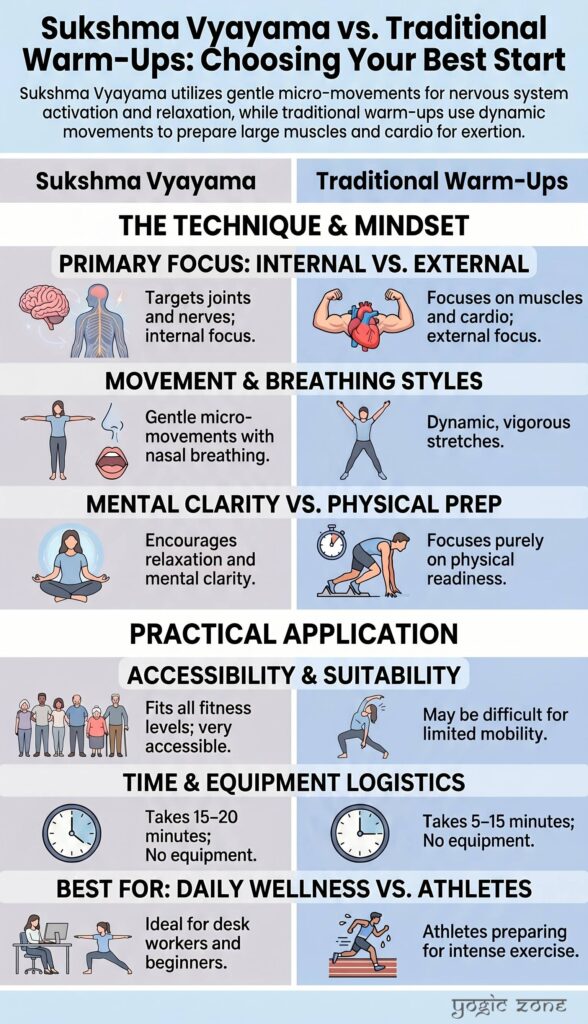
Sukshma Vyayama vs. Traditional Warm-Ups
Most people think of warm-ups as a way to prepare the body for the main practice. Traditional warm-up routines generally focus on increasing blood flow and loosening the larger muscles through stretching and dynamic movements.
This subtle yoga warm-up takes a different approach. It uses gentle, rhythmic micro-movements to work on the smaller joints, sensory organs, and nervous system, promoting both physical mobility and mental relaxation.
| Aspect | Sukshma Vyayama | Traditional Warm-Ups |
|---|---|---|
| Primary Focus | Smaller joints, sensory organs, and the nervous system | Large muscle groups and cardiovascular activation |
| Movement Style | Gentle, rhythmic micro-movements | Dynamic stretches and vigorous movements |
| Breathing | Coordinated with movement and relaxed nasal breathing | Often spontaneous and less structured |
| Effect on the Mind | Encourages relaxation and mental clarity | Primarily prepares the body for exercise |
| Accessibility | Suitable for most ages and fitness levels | May not suit people with limited mobility |
| Equipment Required | None | Usually none |
| Time Required | Can be effective in 15–20 minutes | Typically 5–15 minutes |
| Best For | Desk workers, older adults, beginners, and stressed individuals | Athletes and people preparing for intense exercise |
Whether you use it as a gentle warm-up before your yoga session or as a standalone 20-minute yoga routine for beginners and experienced practitioners alike, twenty mindful minutes each day can do far more for your body and mind than a longer practice that is difficult to sustain.
Breathing Principles for the 20-Minute Routine
Although the traditional system contains more advanced breathing techniques, this simplified routine follows a gentle principle: inhale while opening or expanding the body, and exhale while twisting, folding, or releasing tension.
The goal is not to control the breath aggressively but to allow the breath and movement to work together naturally. Over time, this simple coordination helps cultivate greater body awareness and relaxation.
Why These Eight Sukshma Vyayama Exercises Matter
The eight movements in the routine below are drawn from the traditional system. While the complete system contains 48 practices, I have found these eight to be the most practical and sustainable for students navigating the realities of modern life.
Together, these movements address the areas most impacted by today’s sedentary lifestyle: eyes strained by screens, necks stiffened by prolonged phone use, wrists fatigued by keyboards, spines compressed by office chairs and car seats, and hips, knees, and ankles affected by prolonged sitting and reduced movement. Think of it as a targeted gentle movement practice for stiff joints and an overworked nervous system.
Who Should Practice Sukshma Vyayama?
One of the greatest strengths of this yogic micro-movement practice is its accessibility. Because the movements are gentle and can be easily modified, the practice is suitable for a wide range of people, including:
- Beginners preparing for yoga: It helps improve joint mobility and body awareness before progressing to more demanding asanas.
- Office workers and people with sedentary lifestyles: The practice addresses many of the common effects of prolonged sitting and excessive screen time. Read our blog on yoga for office workers for more information.
- Older adults seeking gentle movement: The rhythmic micro-movements support mobility and circulation without placing excessive strain on the joints.
- People experiencing stiffness or mild mobility limitations: This gentle joint mobility routine offers a gradual and approachable way to restore ease of movement.
- Frequent travelers and commuters: The exercises can help relieve stiffness caused by long hours spent sitting in cars, trains, or airplanes.
- Anyone looking for a simple daily wellness practice: Many practitioners use this daily wellness routine as a standalone routine to maintain flexibility, improve body awareness, and promote mental relaxation.
The 20-Minute Sukshma Vyayama Routine
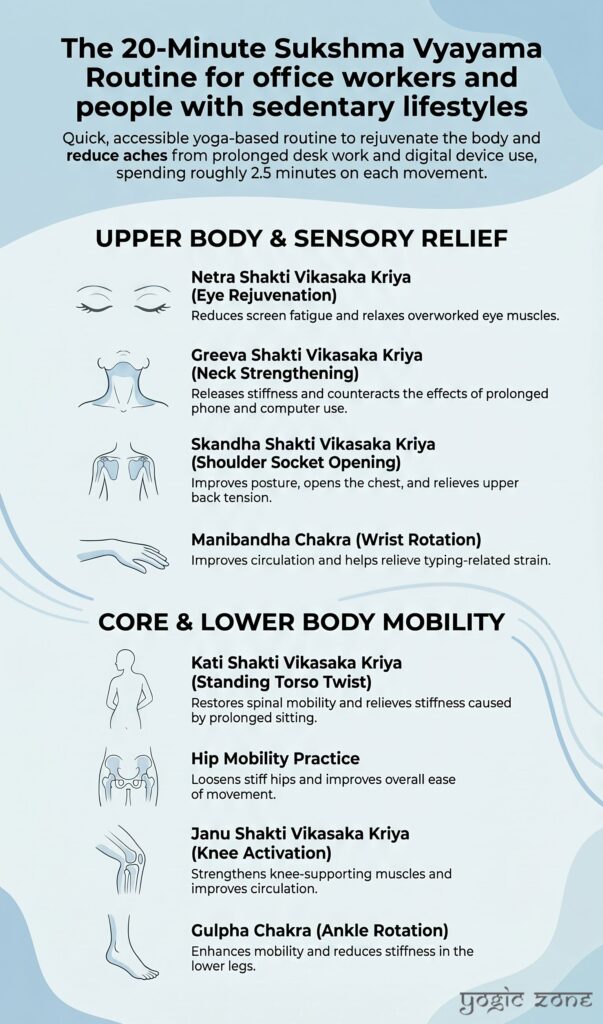
The sequence below moves through eight key zones that are most affected by today’s sedentary lifestyle. Spend roughly 2.5 minutes on each area, moving slowly and coordinating your breath with the movement whenever possible.
As a simple rule, inhale while opening, lifting, or stretching the body, and exhale while twisting, lowering, or releasing tension. Keep the breath smooth, natural, and through the nose.
There is no need to force or count the breaths. Over time, the coordination between breath and movement becomes natural and intuitive.
1. Netra Shakti Vikasaka Kriya (Eye Rejuvenation Technique)
- Benefit: This practice helps reduce screen fatigue, improves circulation around the eyes, and relaxes overworked eye muscles.
- Beginner Tip: If moving the eyes causes discomfort, follow your thumb with your gaze instead of moving the eyes independently.
- Safety Tip: People recovering from recent eye surgery or dealing with severe glaucoma should avoid rapid eye movements and stick to gentle blinking exercises.
- Breathing Cue: Keep the breath smooth and relaxed through the nose.
Quick Facial Reset for Desk Workers
Before beginning Netra Shakti Vikasaka Kriya, spend a few seconds preparing the face and sensory organs.
Karna Shakti Vikasaka (Ear Activation): Gently massaging the earlobes stimulates numerous nerve endings and may help improve alertness and concentration.
Jaw Release: Slow side-to-side jaw movements help release tension from the jaw muscles, where stress often accumulates during prolonged screen work and periods of intense focus.
2. Greeva Shakti Vikasaka Kriya (Neck Strengthening Technique)
- Benefit: Gentle neck movements release stiffness and help counteract the effects of prolonged phone and computer use.
- Beginner Tip: Sit upright in a chair and keep the movements small and controlled.
- Safety Tip: Avoid dropping the head backward if you have severe cervical spondylosis, vertigo, or a diagnosed cervical disc issue.
- Breathing Cue: Inhale while returning to center and exhale during each movement.
3. Skandha Shakti Vikasaka Kriya (Shoulder Socket Opening)
- Benefit: This exercise improves posture, opens the chest, and relieves tension around the shoulders and upper back.
- Beginner Tip: Draw smaller circles with your elbows if full rotations feel uncomfortable.
- Safety Tip: Avoid forcing the movement if you have an active rotator cuff injury or frozen shoulder.
- Breathing Cue: Inhale while lifting and opening the chest and exhale as the shoulders descend.
Advanced Variation: Skandha Tatha Bahu-Mula-Sakti Vikasaka
Once the basic shoulder rotations become comfortable, you may gradually explore Skandha Tatha Bahu-Mula-Sakti Vikasaka. This traditional practice works more deeply on the shoulder blades and shoulder joints, helping improve mobility, strength, and posture.
- Who May Benefit Most: People experiencing poor posture, rounded shoulders, or upper back stiffness from long hours of desk work.
- Safety Tip: Move slowly and avoid forcing the shoulders beyond a comfortable range, especially if you have frozen shoulder or a rotator cuff injury.
4. Manibandha Chakra (Wrist Rotation)
- Benefit: Wrist rotations improve circulation and help relieve typing-related strain.
- Beginner Tip: Rest your forearms on your thighs or a desk for additional support.
- Safety Tip: Avoid the practice during acute wrist inflammation or severe tendonitis.
- Breathing Cue: Maintain slow, natural breathing throughout.
5. Kati Shakti Vikasaka Kriya (Standing Torso Twist)
Benefit: Gentle twisting restores spinal mobility and relieves stiffness caused by prolonged sitting.
Beginner Tip: Keep the knees slightly bent and reduce the range of motion.
Safety Tip: Those with sciatica, herniated discs, or acute low back pain should perform only gentle movements under professional guidance.
Breathing Cue: Inhale to stretch the spine and exhale during the twist.
6. Hip Mobility Practice
- Benefit: These movements help loosen stiff hips and improve overall ease of movement.
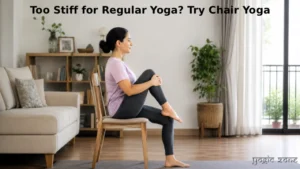
- Beginner Tip: Perform the movements while seated if standing feels uncomfortable.
- Safety Tip: Avoid forcing the joint if you have recently undergone hip surgery or are experiencing acute pain.
- Breathing Cue: Inhale while preparing and exhale as you move into the stretch.
7. Janu Shakti Vikasaka Kriya (Knee Activation)
- Benefit: This exercise strengthens the muscles supporting the knees and improves circulation.
- Beginner Tip: Hold the back of a chair or stand against a wall for balance.
- Safety Tip: People with severe osteoarthritis or recent knee surgery should use gentle seated variations.
- Breathing Cue: Coordinate each contraction with a gentle exhalation.
8. Gulpha Chakra (Ankle Rotation)
- Benefit: Ankle rotations enhance mobility, improve circulation, and reduce stiffness in the lower legs.
- Beginner Modification: Perform the exercise while seated and support the thigh with your hands.
- Safety Tip: Avoid weight-bearing movements if you have a recent ankle sprain or fracture.
- Breathing Cue: Maintain smooth nasal breathing throughout.
Optional Advanced Practices
The eight exercises above form a complete 20-minute routine. As your practice develops, you may choose to explore some additional movements from the traditional system.
Upastha Tatha Svadhisthana-Chakra Suddhi
- Benefit: This traditional practice is believed to help tone the abdominal region and support healthy bowel function. Many older adults find it especially useful for maintaining mobility and digestive comfort.
- Who May Benefit Most: Older adults and people leading highly sedentary lifestyles.
- Safety Tip: Practice gently and avoid forcing the movement. Those recovering from abdominal surgery or dealing with acute digestive conditions should seek guidance from a qualified yoga instructor before attempting it.
Note: The asanas mentioned here are recommended by our qualified and experienced authors for general awareness and inspiration. We do not provide step-by-step instructions, as each individual’s physical condition and needs are unique. We strongly recommend learning yoga under the guidance of a qualified instructor who can offer personalised support and ensure safe practice.
Safe Practice Guidelines: When to Modify or Seek Guidance
Sukshma Vyayama is designed to be gentle, but gentle does not mean that it is suitable for everyone in every condition. Based on the health concerns I commonly see in my students, I recommend these precautions.
| Area / Exercise | Common Issues | Recommended Modification |
|---|---|---|
| Netra Shakti (Eyes) | Eye strain, glaucoma, recent eye surgery | Avoid rapid eye movements; practice gentle blinking or thumb tracking. |
| Greeva Shakti (Neck) | Cervical spondylosis, vertigo | Avoid full neck circles; perform slow side-to-side movements only. |
| Skandha Shakti (Shoulders) | Frozen shoulder, rotator cuff injury | Use smaller circles and avoid painful ranges. |
| Manibandha Chakra (Wrists) | Tendonitis, carpal tunnel syndrome, | Support the forearms and reduce the range of motion. |
| Kati Shakti (Spine) | Lumbar disc problems, sciatica | Reduce the range of twisting and remain pain-free. |
| Hip Mobility Practice | Hip arthritis, recent hip surgery | Perform seated variations and avoid forcing the joint. |
| Janu Shakti (Knees) | Osteoarthritis, previous knee injury | Practice seated versions and avoid locking the knees. |
| Gulpha Chakra (Ankles) | Recent ankle sprain, ligament instability | Perform seated rotations and avoid weight-bearing movements. |
Practicing with the right support can make these movements more comfortable, especially for beginners, older adults, and those with limited mobility. Simple yoga props such as blocks and bolsters can help you modify the exercises safely and maintain better alignment.
Once you finish the final ankle rotations, stand or sit quietly for one minute with your eyes closed. This brief pause allows your nervous system to process the physical movements, leaving you feeling grounded, refreshed, and ready to face the rest of your day.
Like all yogic practices, the real power of Sukshma Vyayama lies not in intensity but in consistency. Twenty mindful minutes each day can do far more for your body and mind than a longer practice that is difficult to sustain.
Do you have any doubts or questions about this article?? I am Pooja Singh, the author, and I would love to hear from you. Send me your question now!
Frequently Asked Questions About Sukshma Vyayama
Is Sukshma Vyayama safe for seniors with severe arthritis or knee pain?
Generally, it is highly safe and recommended. Because Sukshma Vyayama involves gentle micro-movements without putting heavy weight on your joints, it acts like a natural oil to lubricate them without aggravating your knee pain.
Can I practice Sukshma Vyayama sitting on an office chair?
Yes, you absolutely can. Most upper-body movements, like neck rolls, wrist rotations, and shoulder loops, can be performed easily at your work desk to instantly release corporate spinal stress and screen fatigue.
Should Sukshma Vyayama be done before or after a regular gym workout?
It is best done before your main session. It acts as a breath-synchronised warm-up that opens energy channels (nadis) and improves joint flexibility, significantly reducing your risk of pulling or straining stiff muscles.
Can I practice Sukshma Vyayama on an empty stomach if I only have 20 minutes before heading to the office?
Yes, you can, and it is actually ideal. Practicing on an empty stomach allows the internal energy (prana) to flow freely without digestive interruption, giving you an instant morning energy boost.
Is it safe to do Sukshma Vyayama neck and shoulder movements if I already have diagnosed cervical spondylitis?
Generally, it is safe, but with modifications. Avoid any rapid jerks or tilting your head too far backward. Focus strictly on slow, breath-aligned micro-rotations to safely build muscle strength.
What if I feel a cracking sound or mild pain in my joints while doing these subtle exercises?
A gentle cracking sound is normal as tight joints release trapped gases. However, if you feel acute pain, stop immediately. Never force a movement beyond your comfortable range of motion.
How often should an absolute beginner do Sukshma Vyayama to see real relief from chronic lower back stiffness?
Daily practice is best for lasting relief. Just 15 to 20 minutes every morning systematically removes accumulated spinal stiffness, showing visible structural improvements within two weeks.
Should seniors do Sukshma Vyayama standing up, or is it mandatory to sit cross-legged on a yoga mat?
Sitting on the floor is not mandatory. Seniors can comfortably perform the entire routine sitting stably on a sturdy armchair or even standing with a wall support to maintain their balance.
Is it necessary to learn complex breathing techniques before trying Sukshma Vyayama, or can beginners just breathe normally?
Normal, conscious breathing is perfectly fine to start. You do not need complex training; simply try to inhale as you expand or open up, and exhale as you close or contract during the movements.
Can 20 minutes of subtle yoga really reduce mental anxiety and corporate burnout, or is it just physical stretching?
Subtle yoga deeply impacts the mind. By synchronizing minute movements with your breath, it settles a hyperactive nervous system, lowers cortisol levels, and brings immediate mental clarity after a long day.
Best