
Amrita Sharma Tongia is a Co-founder of YogaAdhyayan and a certified Yoga teacher with over a decade of experience. Trained for 900 hours at The Yoga Institute. Read more about Amrita Sharma Tongia.
Most people think of a yoga mat as a surface for comfort and grip, but after more than six years of teaching yoga and completing over 900 hours of advanced teacher training, I have realised that the real yoga mat benefits extend far beyond that.
Traditionally, yogis sat on grass or cloth, believing that this subtle barrier between the body and the earth helped conserve praṇa (vital energy). A mat acts as an insulator of that energy, helping us hold it steady. It becomes a personal sanctuary: a defined space that invites focus, aligned movement, and inward reflection.
Whether at home or outdoors, your mat is not just a dedicated yoga practice surface; it’s a foundation for mindful movement and a support for body, mind, and practice.
Here are seven key yoga mat benefits, and why using a yoga mat instead of practicing on the bare floor makes a real difference for your safety, alignment, and consistency.
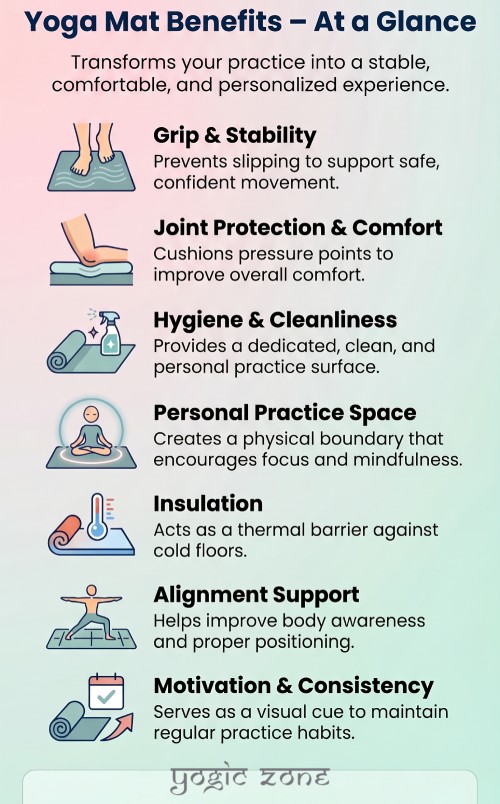
Yoga Mat Benefits – At a Glance
| No. | Benefit | Why It Matters |
|---|---|---|
| 1 | Grip & Stability | Helps prevent slipping and supports safe movement |
| 2 | Joint Protection & Comfort | Cushions pressure points and improve comfort |
| 3 | Hygiene & Cleanliness | Creates a personal, clean practice surface |
| 4 | Personal Practice Space | Encourages focus and mindfulness |
| 5 | Insulation | Keeps the body comfortable on cold floors |
| 6 | Alignment Support | Improves body awareness and positioning |
| 7 | Motivation & Consistency | Encourages regular practice habits |
1. Provides Essential Grip and Stability
This is the most obvious, but also the most important yoga mat benefit. A high-quality non-slip yoga mat has a textured, anti-slip surface that prevents your hands and feet from sliding, even in difficult poses. This grip is important for maintaining proper form and avoiding slips that could lead to injury.
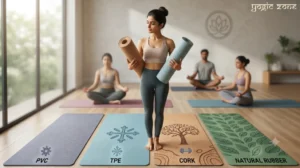
Grip performance varies between materials. Natural rubber and PU are known for strong traction and superior yoga mat grip, while cork mats become grippier as moisture increases. I suggest that you read our guide to the different types of yoga mats.
Tip: Check the mat surface material and texture before you buy. A good grip protects you and supports correct alignment.
2. Cushions and Protects Your Joints
When you practice on a hard floor, every transition or kneeling pose places pressure on your joints and bony contact points. Without enough cushioning, your knees, wrists, elbows, and spine can feel the strain.
For practitioners suffering from joint sensitivity or back pain, this discomfort can affect the quality and frequency of practice. A good yoga mat provides a supportive layer that not only cushions your joints but also helps distribute body weight more evenly across the contact surface.
This reduces pressure on sensitive areas such as the wrists when the hands are supporting body weight, the knees during kneeling poses, and the hips during seated postures. The result is greater comfort, allowing you to hold asanas longer, move deeper, and feel safer in your practice.
This is especially relevant if you are looking for a yoga mat for back pain or knee support and particularly beneficial during styles such as Yin Yoga and Restorative Yoga, where poses are often held for longer periods.
Tip: Choose a mat thickness appropriate to your body type and joint needs. For example, 4 mm offers more stability while 6 mm provides greater cushioning, and understanding this difference is one of the most important decisions when buying a mat. Learn how to choose the right yoga mat thickness for your body type.
3. Ensures Hygiene and Cleanliness
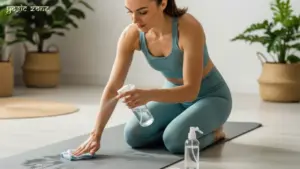
Owning a clean yoga mat reduces contact with floor germs and shared studio mats, which is particularly important in humid climates where bacteria multiply quickly. A clean mat helps create a more comfortable and pleasant environment for practice.
Knowing that your practice surface is clean and familiar can provide added peace of mind, especially in shared practice spaces.
Tip: Read our helpful guide on yoga mat cleaning.
Do you have any doubts or questions about this article?? Amrita Sharma Tongia, the author, would love to hear from you. Send us your question now!
4. Defines Your Personal Practice Space
The simple act of unrolling your yoga mat creates a dedicated, sacred space for your practice. It indicates your boundary and helps you mentally separate from the world around you, even if you are in a crowded room.
This non-physical yoga mat benefit can increase your focus and mindfulness. Over time, simply stepping onto your mat sends a mental signal that it’s time to calm down, focus, and turn inward. A phenomenological study exploring the yoga mat as a material, a space, and a practice-object by Gillian Lemermeyer is worth reading.
5. Provides Insulation
Practicing on a cold floor, especially during an early morning yoga session, can stiffen your muscles before you even begin your warm-up. A yoga mat provides thermal insulation that keeps you warm and comfortable.
This is especially noticeable on marble, tile, or stone floors and helps your body stay flexible and ready for practice. This small but important yoga mat benefit contributes to a more enjoyable session.
Tip: If you practice in a room with a cold floor, consider a slightly thicker or thermal mat to keep your practice comfortable.
6. Serves as a Guide for Alignment
Many yoga mats come with alignment lines or a specific texture that helps with posture and body placement. For example, the edges of the mat can help ensure your feet are wide apart, and the central line can help you align your body.
Tip: These visual indicators train your body to maintain proper form, even when you are not on the mat. This is one of the most important yoga mat benefits for beginners.
7. Acts as a Powerful Motivator
Just having a mat unrolled and visible in your home yoga space can be a powerful motivator. It’s a constant, gentle reminder to practice. This is another non-physical yoga mat benefit worth considering.
The mat becomes a symbol of your commitment to your well-being. It can inspire you to step on it for a quick session on a busy day, ensuring that you stay consistent with your practice.
Which Yoga Mat Benefit Matters Most for Your Style?
While every yoga mat offers the benefits discussed above, some benefits become more important depending on the style of yoga you practice.
| Yoga Style | Most Important Benefit |
|---|---|
| Hatha Yoga | Balanced grip and comfort |
| Yin Yoga | Cushioning and pressure relief |
| Restorative Yoga | Comfort during long holds |
| Vinyasa Yoga | Reliable traction during transitions |
| Power Yoga | Stability and durability |
| Hot Yoga | Sweat-resistant grip |
Practitioners of Yin Yoga, Restorative Yoga, and Prenatal Yoga should prioritise cushioning and comfort because they spend more time in floor-based postures and longer holds.
In contrast, those practicing Vinyasa, Power Yoga, or Hot Yoga typically benefit more from grip, traction, and stability that support dynamic movement.
Yoga Mat vs Exercise Mat: What’s the Difference?
In my experience as a yoga teacher, this is an area that often causes confusion. Many people assume yoga mats and exercise mats are interchangeable, but understanding the difference is important for getting the most from your practice.
They are designed for different purposes, and because those differences are not always obvious, it’s common for beginners to choose the wrong type and miss out on some of the benefits discussed above.
| Yoga Mat | Exercise Mat |
|---|---|
| Dense and stable | Often thicker and softer |
| Designed for balance and standing poses | Designed primarily for floor exercises |
| Better ground feedback | Greater cushioning |
| Supports stability | May feel unstable during balancing poses |
Investing in the Right Mat Is Investing in Your Practice
The yoga mat benefits go far beyond comfort and grip. A well-chosen mat supports your safety, comfort, focus, and confidence, helping you build a more enjoyable and consistent practice.
By choosing a mat that suits your needs, you are not just buying a product; you are investing in your yoga journey.
Whether you prefer an eco-friendly yoga mat made from natural rubber, a lightweight travel yoga mat, or an extra-thick mat for joint support, the best yoga mat for your practice is one that matches your body, style, and goals.
As a yoga instructor, I always encourage choosing your mat with intention. Consider your practice style, joint needs, environment, and sustainability values. A well-chosen mat supports you for years. Do not hesitate to discuss with your yoga instructor before you buy.
Do you have any doubts or questions about this article?? Amrita Sharma Tongia, the author, would love to hear from you. Send us your question now!
FAQs: Your Questions Answered
Is a yoga mat necessary for beginners, or can I use a regular bedsheet?
No, a bedsheet is not a safe substitute. A proper yoga mat provides essential anti-slip grip to keep your hands and feet stable, protecting fresh beginners from slipping and pulling muscles on hard Indian tile or marble floors.
Can senior citizens practice yoga safely without a specialised mat?
It is not safe to skip a mat if you are a senior. Older bones require a dense, thick yoga mat (ideally 6mm) to cushion sensitive knees, hips, and wrists from joint pain while offering steady traction to prevent falls.
Should corporate office workers buy a thick or thin yoga mat for back pain?
Ideally a thick 6mm mat is recommended. Office workers sitting all day suffer from a stiff spine and weak lower back; a cushioned mat absorbs pressure during floor stretches, preventing vertebrae from grinding against hard surfaces.
Can I just practice yoga on my living room carpet or standard rug to save money?
Yes, you can, but only for seated asanas and pranayama. For dynamic standing poses, regular rugs easily slide across slippery tile floors or bunch up under your feet, increasing your risk of an ankle sprain. A real yoga mat grips safely to the floor.
Is it safe to do floor yoga poses on a bare marble or tiled floor without any mat?
No, it is not recommended for your joints. Bare marble or vitrified tile has zero shock absorption. Pressing your knees or spine directly onto it can cause severe bruising or worsen underlying joint problems over time.
What is the difference between a regular exercise mat and a yoga mat?
Yoga mats are thinner, denser, and designed to provide a stable, non-slip surface for balance and controlled movement. Exercise mats are usually thicker and softer, meant for cushioning during high-impact workouts. Using a yoga mat helps ensure proper grounding and alignment for yoga practice.
Does the material of a yoga mat (PVC, TPE, rubber, or cork) impact performance or safety?
Yes, the material affects grip, durability, cushioning, and eco-friendliness. For example, natural rubber and cork offer excellent grip and sustainability, while PVC is durable but less eco-friendly. Choose a material that matches your comfort preference, values, and sensitivity to odor or chemicals.
Is a yoga mat important for hot yoga or sweaty sessions?
Definitely. In hot yoga or any sweat-intensive practice, slipping becomes a real risk. A high-grip, sweat-resistant mat helps you stay stable and safe. Natural rubber, cork, or textured “sticky” mats handle moisture well. Some practitioners also pair their mat with a yoga towel for added traction.
What if my hands sweat heavily during summer? Won’t I slip and get hurt on a cheap PVC mat?
Yes, cheap PVC mats are dangerous, as they become slippery when wet. If you have sweaty palms, it is better to avoid basic PVC and invest in a natural rubber or TPE mat. They offer open-cell textures that stay grippy even during intense summer heat.
Is a yoga mat necessary if I am only doing basic pranayama and daily meditation?
Not really; a mat isn’t strictly mandatory, but it helps. While a firm cushion works for breathing, an unrolled mat acts as an excellent thermal insulator against cold floors and creates a clean, dedicated mental boundary for your daily ritual.