
23 years experience – Yoga trainer | Pilates | Diet & Nutrition Consultant | Ashtanga Yoga | Power Yoga | Therapeutic yoga | Know more about Uma Bhanushali.
I often see new students wonder, “Do I need anything more than a yoga mat to start practice?” While a suitable mat is essential, a few yoga props for beginners is a great advantage. Many beginners struggle not because yoga is difficult, but because the body needs support while learning new movements, balance, and alignment. Yoga props for beginners help make practice safer, more comfortable, and easier to understand from day one.
As a certified yoga trainer with years of experience teaching beginners across age groups, I have seen that students progress more steadily when they start with proper support. Props are not shortcuts. They are learning tools that respect the body’s current ability.
What Are Yoga Props and Why Beginners Need Them
Yoga props are supportive tools that assist alignment, balance, flexibility, and comfort during asana practice. For beginners, props reduce unnecessary strain and make asanas accessible without forcing the body.
Most beginners come with stiff bodies, weak postural muscles, or joint sensitivity. Expecting perfect postures without support often leads to discomfort or discouragement. Yoga props allow correct positioning while the body gradually adapts. This study on undergraduates proves that yoga props help in developing a sustainable yoga practice.
Primary Purpose of Yoga Props For Beginners
| Yoga Prop | Primary Purpose | Suitable for Beginners |
|---|---|---|
| Yoga mat | Grip, stability, hygiene | Yes |
| Yoga block | Alignment and balance | Yes |
| Yoga strap | Assisted stretching | Yes |
| Knee cushion | Joint protection | Yes |
| Yoga bolster | Gentle and restorative support | Yes |
| Yoga blanket | Cushioning and warmth | Yes |
Yoga Mat: The Essential Foundation
As a yoga instructor, I can’t express enough how important a good yoga mat is for beginners. A yoga mat provides grip, stability, and cushioning during practice. A non-slip mat prevents slipping and helps maintain balance in standing and seated asanas.
For beginners dealing with knee pain, the right thickness makes a big difference. A mat with 6 mm thickness offers extra cushioning, whereas a standard 4 mm mat may be too thin for sensitive joints. Start with a thicker mat if comfort is your priority, especially on hard floors.
Materials like natural rubber or TPE offer better grip than very thin PVC mats. Read our blog to know the advantages and disadvantages of the different types of yoga mats.
Yoga Blocks: Support for Alignment and Balance
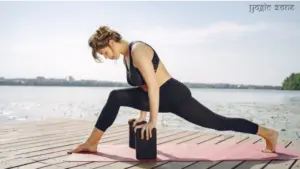
Yoga blocks bring the floor closer to the body and support correct alignment. Beginners often lack flexibility, and blocks help maintain posture without bending or collapsing incorrectly.
If you are wondering “how to use yoga blocks as a beginner,” try placing a block under each hand; it helps to keep your back straight, even if your body feels stiff. This support lets you stretch safely and slowly, without hurting yourself. It also helps you build the right posture from the start. Buying decisions will be much easier once you read our article on yoga block uses.
There are two types of yoga blocks – foam blocks are lightweight and have soft edges, while cork blocks offer stability for those who prefer firmer support. You must read our blog on cork vs. foam yoga blocks before you buy.
Do you have any doubts or questions about this article?? I am Uma Bhanushali, the author, and I would love to hear from you. Send us your question now!
Yoga Strap: Assisted Flexibility Without Strain
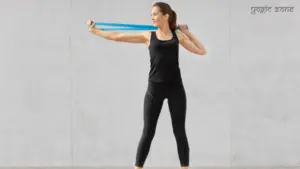
A yoga strap (sometimes called a yoga belt) extends reach and supports controlled stretching. For beginners, straps prevent overstretching while improving flexibility gradually.
Straps are helpful in forward bends, hamstring stretches, and shoulder-opening movements. They allow the body to stay aligned while muscles lengthen safely. Read about the ten practical yoga strap benefits.
Yoga Knee Cushion: Protecting Sensitive Joints
A knee cushion provides extra padding for knees, wrists, and elbows. Beginners with joint sensitivity benefit greatly from this simple prop.
Knee cushions for yoga are especially helpful during asanas that place direct pressure on your knees, wrists, or elbows—particularly when practicing on a hard floor.
Yoga Bolster: Support for Gentle and Restorative Practice
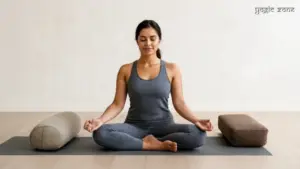
A yoga bolster supports the body fully during gentle or restorative asanas. Beginners who feel fatigued or stiff often find bolsters helpful for relaxation-based poses.
I recommend the use of bolsters in prenatal and senior yoga classes to help students relax, breathe deeply, and maintain posture safely. It provides full-body support — especially if you are bending backwards. Read our blog on yoga bolster basics, it will help you buy the right bolster.
Yoga Blanket: Your Comfort Companion
Yoga blankets provide cushioning, warmth, and height adjustment. They can be folded, rolled, or layered depending on the need.
Beginners use blankets to elevate hips in seated poses, support the neck in supine positions, or protect knees during floor-based asanas. A cotton yoga blanket is usually the most practical option.
How to Choose Yoga Props as a Beginner
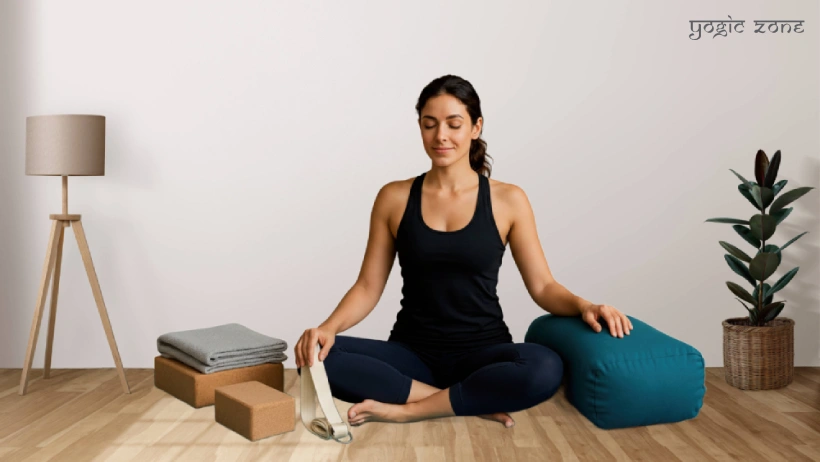
Beginners should start with only essential props and add more as needed. A yoga mat, one block, and a strap are sufficient for most home practices.
Choose props that feel stable and comfortable rather than decorative. Size, firmness, and material matter more than appearance.
Why Yoga Props For Beginners Matter
Yoga props help reduce the risk of strain, support correct alignment, and allow beginners to practice with confidence from the start. As a qualified yoga instructor, I consistently encourage beginners to use props as part of mindful learning.
Yoga props for beginners create a stable and reassuring practice environment where movement feels supported rather than forced. They help the body adapt gradually, improve posture awareness, and promote regular practice without pressure. Remember: using yoga props is a sign of commitment to your health and comfort, not a weakness.
Do you have any doubts or questions about this article?? I am Uma Bhanushali, the author, and I would love to hear from you. Send us your question now!
Frequently Asked Questions About Yoga Props for Beginners
I am new to yoga and not flexible at all. Which props should I start with?
Most beginners start with a yoga block, a yoga strap, and a supportive mat. These help you reach comfortably in stretches, maintain alignment, and reduce strain.
Are yoga props only for beginners, or do advanced practitioners use them too?
Props are used at every level. Even advanced yogis use them to extend stretches, improve alignment, and safely explore advanced variations.
How do yoga blocks help if my balance is weak?
Blocks give you a sturdy foundation when your hands can’t comfortably reach the floor. This reduces wobbling and helps you build balance gradually and safely.
Can I practice yoga without props if I don’t want to buy anything right now?
Common household items like thick books (blocks), a scarf or belt (strap), or a towel (bolster) can work as temporary substitutes. But not advisable, as they may not be stable.
Is it okay to use props in every yoga session, or will it slow my progress?
Using props often supports faster progress because you’re practicing with correct alignment and without unnecessary strain—preventing setbacks or injury.
Should I use yoga props even if I am young and fairly flexible?
Yes. Props are not only for stiffness. They support correct alignment and help prevent poor habits, even if flexibility is not a major issue.