
Counselling Psychologist, Therapist & Yoga Teacher | Yoga RYT-900 AYUSH | Reiki Level 1 & 2 | Advanced Diploma in Counselling Psychology. Know more about Devin Lohana
When students ask me which prop they should buy first, I always say: a yoga block. And very often, the next question is the same: “Should I choose cork or foam?” A yoga block can transform the way you practice—whether you want better alignment, deeper stretches, or more confidence in balance asanas.
Understanding the differences between cork and foam yoga blocks helps you choose what works best for your body, budget, and style of yoga. In this guide, I will compare cork vs foam yoga blocks based on years of my teaching experience so you can select the one that truly supports your asana practice.
Cork vs Foam Yoga Blocks—A Comparison
Before we explore the details, here’s a simple side-by-side comparison to help you understand the key differences at a glance.
Cork vs Foam Yoga Blocks – Key Differences
| Features | Foam Yoga Blocks | Cork Yoga Blocks |
|---|---|---|
| Material | High-density EVA foam | Natural cork from cork oak trees |
| Weight | Ultra-light | Heavier and more grounded |
| Comfort | Soft, ideal for sensitive joints | Firm, can feel hard under pressure |
| Stability | Can compress under your weight, less stable in standing poses | Extremely stable; does not compress |
| Grip | Smooth surface, may slip when damp | Natural grip improves with sweat. |
| Durability | May dent or wear over time | Long-lasting and shape-retaining |
| Eco-friendliness | Synthetic material | Biodegradable and sustainably harvested |
| Price (India) | Budget-friendly (from ~₹250) | Premium (from ~₹700) |
| Best For | Beginners, restorative, gentle yoga | Hot yoga, advanced practice, eco-conscious yogis |
Foam Yoga Blocks
Foam blocks are the ones I most commonly see in group classes, especially for beginners. They are light, soft, and easy to move around during a dynamic flow.
Advantages of Foam Yoga Blocks
- Lightweight and Portable: Foam blocks are very light, making them easy to carry and move around on your mat during a fast-paced flow.
- Soft and Comfortable: The softness of the foam provides extra cushioning. This makes them ideal for sensitive knees, wrists, or backs in asanas where you are putting direct pressure on a joint.
- Affordable: Foam blocks are the most budget-friendly option, making them a great starting point for beginners who are just beginning to explore props. Prices start from approximately Rs. 250.00.
Disadvantages of Foam Yoga Blocks
- Can Be Less Stable: Due to their softness, foam blocks can compress under heavy weight. They might feel a little less sturdy in asanas when you put your weight on them.
- Less Durable: Foam can show wear and tear over time and with heavy use and may even lose its shape or density.
In my restorative classes, foam blocks are often preferred because they feel gentle when the body rests on them for long durations.
Do you have any doubts or questions about this article?? Devin Lohana, the author, would love to hear from you. Send us your question now!
Cork Yoga Blocks
Cork blocks feel very different—solid, sturdy, and dependable. They are made from renewable cork bark, making them a favourite among eco-conscious practitioners.
Advantages of Cork Yoga Blocks
- Superior Stability: Cork blocks are denser and heavier than foam, providing a solid foundation. Perfect for balancing asanas like Ardha Chandrasana and Trikonasana.
- Eco-Friendly Material: Cork is a natural, biodegradable material harvested without harming the tree.
- Highly Durable: A well-made cork block will last for many years without losing its shape or density.
- Excellent Grip: Cork has a natural texture that provides a secure, non-slip grip. When it gets slightly damp from sweat, the grip actually improves.
Disadvantages of Cork Yoga Blocks
- Heavier: The added weight can make them less convenient to carry around.
- More Expensive: Cork blocks are generally more expensive than foam ones due to the material cost and manufacturing process. Prices start from approximately Rs. 700.00.
- Less Comfortable: The firmness of the cork can feel less comfortable in gentle poses or when placed under sensitive joints.
In my hot yoga sessions, cork is always the block I recommend because foam tends to get slippery when hands begin to sweat. Don’t miss the Yoga Journal’s expert overview of yoga props.
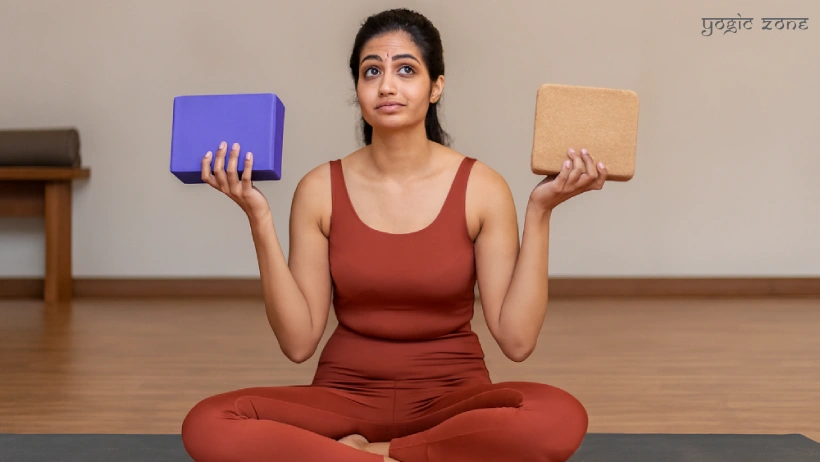
Which Is Better: Cork or Foam Yoga Block
When comparing cork vs foam yoga blocks, the best choice depends entirely on your practice and comfort. I often guide students based on their goals:
Which Yoga Block Should You Choose?
| Choose Foam Blocks If You: | Choose Cork Blocks If You: |
|---|---|
| Are a beginner | Practice Ashtanga, power, or hot yoga |
| Have sensitive joints | Need maximum stability for balance |
| Prefer restorative or yin | Prefer eco-friendly materials |
| Want a lightweight, affordable prop | Want a durable, long-lasting block |
Choose a Foam Block if:
- You are a beginner.
- You have sensitive joints.
- You prefer gentle, restorative, or yin styles.
- You need something lightweight and affordable.
Choose a Cork Block if:
- You practice hot yoga, Ashtanga Vinyasa, or power yoga
- You want maximum stability during standing or balancing asanas.
- You prefer eco-friendly materials.
- You want a prop that lasts for years.
Our informative article on yoga block uses explains how you can use yoga blocks to improve your practice.
Personal Recommendation
After teaching for years, I have observed that—
- Foam blocks help beginners feel safe and comfortable.
- Cork blocks help intermediate and advanced yogis deepen alignment and stability.
There is no clear winner when it comes to cork vs foam yoga blocks; both foam and cork blocks are excellent tools that will help you grow your practice. Ultimately, the best yoga block is the one that supports you, encourages confident movement, and enhances your alignment in every asana. If you are new to yoga and unsure which props to start with, you can explore the beginner-friendly yoga props guide for a better practice.
Do you have any doubts or questions about this article?? Devin Lohana, the author, would love to hear from you. Send us your question now!
Frequently Asked Questions About Cork Vs Foam Yoga Blocks
Which is better: cork or foam yoga blocks?
Cork offers strong grip and stability for balance-focused asanas, while foam provides softer support for gentle styles. The better choice depends on whether you prioritise firmness or comfort.
Are cork yoga blocks hard for beginners to use?
Cork may feel heavier and firmer at first, but beginners adapt quickly. Its solid structure helps improve alignment and builds confidence in standing or balancing asanas.
Do cork yoga blocks slip if my hands get sweaty?
No. Cork has a naturally textured surface that actually grips better with moisture, making it highly reliable during hot yoga, fast flows, and sweat-intensive practice sessions.
Are foam yoga blocks stable enough for balance asanas?
Foam blocks offer gentle cushioning but can compress under body weight, making them less stable for balance work. Cork blocks provide firmer, more dependable support in these asanas.
Which block lasts longer—cork or foam?
Cork blocks retain their shape for years and resist dents, even with daily practice. Foam blocks may soften, compress, or wear down faster, especially on rough surfaces or with heavy use.
Which is better for restorative yoga: cork or foam blocks?
Foam is ideal for restorative or yin practice because its cushioning supports the body comfortably during long holds. Cork is supportive too but may feel too firm under sensitive joints.
Are cork yoga blocks eco-friendly?
Yes. Cork is a natural, renewable, and biodegradable material harvested without cutting the tree, making it a far more eco-friendly choice compared to synthetic EVA foam yoga blocks.
How many yoga blocks do I need for my practice?
Most practitioners benefit from using two blocks for better alignment, deeper stretches, and support. Beginners can start with one block and add a second as they progress in their practice.