
Naturopathy and Yoga Physician in National institute of Naturopathy (NIN), Pune | BNYS | Chakra Meditation Expert | Therapeutic Yoga & Mind Body Medicine | Know more about Dr. Deepika Tomar.
Have you ever felt stuck, anxious, or disconnected from yourself, even after trying everything from morning walks to meditation apps? We are surrounded by ancient wisdom and energy healing practices, yet it’s easy to feel caught in modern chaos.
That’s why I often recommend chakra meditation to support calm and mental peace. If you are not sure where to begin, this guide on Chakra meditation for beginners is a great starting point.
Over the last five years, I have guided many through their first sessions. Most arrive sceptical or overwhelmed by the jargon they have picked up on social media. I always tell them that once you strip away the mystery and focus on simple steps, this meditation practice becomes accessible to anyone who can sit quietly for 10 minutes.
What Are Chakras and Why Should You Care?
Chakras are energy centers in your body where prana (life force) flows. The word “chakra” literally means “wheel” in Sanskrit, describing how these centers spin and distribute energy throughout your system. Understanding chakra balancing is fundamental to effective spiritual practice.
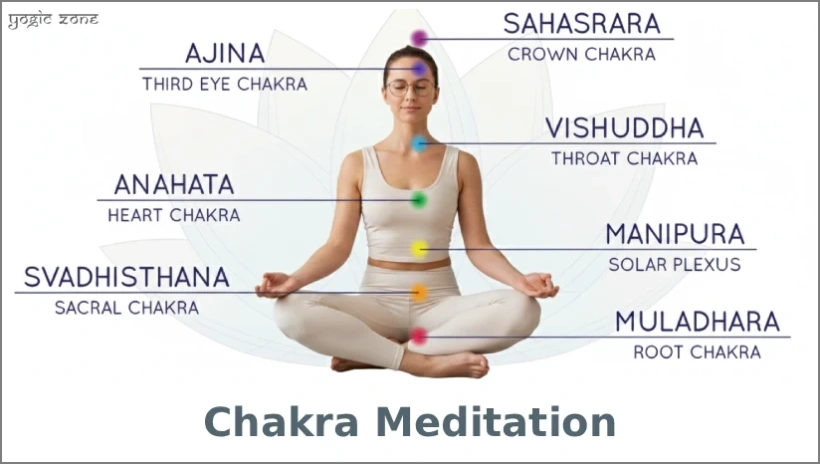
The 7 Chakras vs. 114 Chakras—What’s the Difference?”
My students often ask me this after hearing references to 114 chakras in spiritual talks or traditional texts. Both are part of Indian yogic tradition.
The 7-chakra system is the beginner framework while the 114-chakra map is more advanced and detailed. We focus on the 7 main chakras aligned along your spine—from the base to the crown of your head—as the practical starting point for learning the chakra system.
Do you have any doubts or questions about this article?? I am Dr. Deepika Tomar, the author, and I would love to hear from you. Send me your question now!
The 7 Main Chakras at a Glance
Visualize each color glowing at its location during meditation—red grounds you, violet connects you to higher awareness.
| Sanskrit Name | Chakra | Location | Color | Element | Key Aspect |
|---|---|---|---|---|---|
| Muladhara | Root | Base of spine | Red | Earth | Security, grounding |
| Svadhisthana | Sacral | Lower abdomen | Orange | Water | Creativity, emotions |
| Manipura | Solar Plexus | Upper abdomen | Yellow | Fire | Confidence, willpower |
| Anahata | Heart | Center of chest | Green | Air | Love, compassion |
| Vishuddha | Throat | Throat | Blue | Space | Communication, truth |
| Ajna | Third Eye | Between eyebrows | Indigo | Light | Intuition, clarity |
| Sahasrara | Crown | Top of head | Violet/White | Cosmic | Connection, awareness |
The above table gives beginners clear chakra basics without heavy theory.
Beej Mantras for the 7 Chakras: Simple Chanting for Beginners
Now that you know each chakra’s location, color, and core energy, activate them instantly with these Beej Mantra practices—chant each seed sound softly for 1 minute while focusing on its spot.
| Beej Mantra | Chakra | 3-Minute Beginner Hack |
|---|---|---|
| LAM | Muladhara (Root) | Sit firmly, feel your feet, slow breathing |
| VAM | Svadhisthana (Sacral) | Gentle belly breathing, soften the jaw |
| RAM | Manipura (Solar Plexus) | Straight spine, 10 slow exhales > inhales |
| YAM | Anahata (Heart) | Palms on chest, breathe as chest widens |
| HAM | Vishuddha (Throat) | Hum softly (“mmm”), feel throat vibration |
| OM | Ajna (Third Eye) | Relax forehead, gaze lightly between brows |
| AUM/Silence | Sahasrara (Crown) | Sit still, sense expansive space above head |
How Chakra Meditation Differs from Regular Mindfulness
Chakra meditation and regular mindfulness both help calm the mind, but they use different meditation techniques. Mindfulness usually involves observing the breath or thoughts without focusing on a specific point.
In Chakra meditation for beginners, attention is gently directed to specific energy centers along with breath or simple sound repetition.
In my classes, many students find mindfulness difficult at first because the mind wanders easily. Chakra meditation gives them a clear focus point in the body, making it easier to stay present. Both practices are helpful, and over time, many people choose between them depending on what they need on a particular day.
Pranayama: Preparing the Breath for Meditation
Pranayama is recommended before meditation because it prepares both the body and the mind for stillness. By practicing slow and controlled breathing, the nervous system shifts from a stress response (sympathetic activity) to a relaxation response (parasympathetic activity).
In simple terms, pranayama does not “stop” thoughts immediately, but it slows down the flow of thoughts and makes the mind steady. As the breath becomes smooth and rhythmic, the brain receives a signal to relax, making it easier to enter a meditative state.
Therefore, pranayama acts as a bridge between physical practice and meditation. In my classes, I usually recommend beginners stick to Nadi Shodhana for the first 2–3 weeks before trying stronger kriyas.
1) Nadi Shodhana Pranayama (Alternate Nostril Breathing)
Why it helps: balances breath flow and supports focus.
Beginner tip: breathe without breath-holding.
Safety note: avoid forcing breath if you have sinus congestion, panic tendency, or dizziness.
2) Kapalabhati Kriya (Skull Shining Breath) (optional)
Why it helps: energising, often linked with Manipura focus.
Beginner tip: do only 20–30 gentle pumps.
Avoid if: high blood pressure, a hernia, pregnancy, heavy acidity, or recent abdominal surgery.
Read our article on pranayama for beginners to learn about simple breathing techniques.
Mudra: A Simple Hand Gesture for Better Focus
When pranayama has slowed the breath and relaxed the mind, a mudra can be added to support focus. Together, they prepare the body and mind to sit comfortably in meditation. In many meditation practices, the thumb and index finger are gently joined to form Gyan Mudra.
In yogic philosophy, the thumb represents universal consciousness (Brahman), and the index finger represents individual consciousness (Jiva), and their union symbolises harmony between the individual mind and higher awareness.
From a practical and physiological point of view, this mudra also supports concentration. The gentle contact of the fingers creates a relaxation signal to the brain through nerve endings in the hands, promoting calmness and improving focus during meditation.
Best Time for Practice According to Indian Tradition
Brahma Muhurta—the period approximately 1.5 hours before sunrise (usually 4:30-5:30 AM) is considered ideal for chakra meditation. The atmosphere is naturally calm, and your mind is less cluttered for daily meditation.
However, if early morning doesn’t work with your schedule, practice whenever you can maintain consistency. Evening practice after work can also help release accumulated stress.
Quick Desk-Friendly Chakra Practice for Busy Professionals
If you are busy in meetings or have long laptop hours, these quick mudras are helpful.
- Prana Mudra technique (Energy gesture)
- Gyan Mudra technique (Focus gesture)
Unlike dynamic practices, meditation mudras are inward-focused. They are designed to steady the mind and regulate the nervous system. Explore the various mudras for meditation in our detailed blog.
Supporting Your Practice with Sattvic Foods
While you don’t need to be vegetarian to practice chakra meditation for beginners, traditional Indian wisdom suggests sattvic (pure) foods support energy balance. Prefer light, fresh, minimally processed meals—root vegetables for grounding, seasonal fruits for emotional balance, and whole grains like khichdi for inner strength.
Avoid heavy, processed foods before practice, as they create sluggishness. For a complete sattvic eating guide, read Yogic Diet Simplified: Eat To Transform Your Mind, Body, And Life.
Common Mistakes I See in My Classes
Forcing visualization: If you can’t “see” colors clearly, that’s normal. Focus on the location and sensation instead. Most students feel temperature changes or subtle pulsing before they visualize anything.
Skipping lower chakras: Many beginners want to jump straight to the Ajna (third eye) because it sounds more spiritual. Balance requires working through all seven centers, especially grounding through your root chakra first.
Holding breath unconsciously: Keep your breathing natural and relaxed. Tension blocks energy flow rather than enhancing it.
Safety, Precautions, And Common Concerns
Chakra meditation for beginners is generally safe for most people, but certain conditions require extra care. I have summarised the medical conditions and my recommendations in the table below.
| Condition | Recommendation |
|---|---|
| High blood pressure | Avoid intense pranayama like Kapalbhati; stick to gentle awareness and slow breathing |
| Pregnancy | Safe after first trimester; skip strong abdominal focus |
| Menstruation | Keep practice calming; avoid Kapalbhati or intense breathwork |
| Recent surgery or hernia | Wait for medical clearance; avoid core engagement and abdominal locks (bandha) |
| Heart conditions | Consult your doctor first; avoid breath retention and keep sessions short |
| Severe depression or anxiety | Practice with a qualified teacher; deep introspection can sometimes increase rumination—start with guided, shorter sessions |
| Fear of Kundalini awakening | Don't chase intense sensations; stick to one chakra at a time with soft breath and short practice |
If you feel dizzy, panicky, or emotionally overwhelmed, open your eyes, breathe normally, and stop.
Female students often ask me about practicing during menstruation. My advice is to avoid intense practice during the first two days, but simple awareness meditation can actually support comfort.
To further assist physical ease, some find yoga bolster basics helpful for seated support during these times.
How Do I Know If Chakra Meditation Is Working?
Students often worry they are doing it wrong if they don’t feel dramatic changes right away. From my experience teaching chakra meditation for beginners, progress is usually gradual and practical rather than intense.
Within 1–3 weeks of consistent practice, some people notice mild body sensations such as warmth, coolness, tingling, or lightness. These are normal signs of the nervous system shifting from a stress response to a relaxation state. More often, the changes appear in everyday life.
Signs you may notice include:
- You recover faster from stressful situations
- Your breath becomes naturally slower, even outside meditation
- You feel less reactive during difficult conversations
- You fall asleep more peacefully
- Your posture improves without conscious effort
- You experience better focus and emotional calmness
At first, it may take 10–15 minutes to feel relaxed because the mind is restless. With daily practice, many students reach the same calm state within a few minutes.
If any sensation feels uncomfortable, simply return attention to your breath and avoid forcing concentration.
These real-life shifts are better markers of progress than chasing visions or perfect energy flow. Research on meditation practices, including studies on heartfulness meditation from a neuroscientific perspective, confirms that consistent meditation leads to measurable improvements in stress management and emotional regulation.
Chakra meditation doesn’t need to be complicated or time-consuming, students who practice 3-4 times weekly for a month report feeling more centered and less reactive to daily stresses.
When you combine a steady posture, gentle pranayama, and one clear focus point, your mindfulness practice becomes grounded and safe. If you stay consistent, Chakra meditation for beginners can support calmer attention, stress relief, and a deeper sense of inner balance in a way that fits modern Indian life.
Do not treat meditation as a task to complete. Consider it your personal time to connect with yourself and understand your mind more deeply.
Do you have any doubts or questions about this article?? I am Dr. Deepika Tomar, the author, and I would love to hear from you. Send me your question now!
Frequently Asked questions About Chakra Meditation For Beginners
Can chakra meditation be dangerous for beginners if done without a guru?
It’s safer with proper guidance. Without authentic instruction, you may practice incorrectly and feel discomfort. It’s always good to have a guru for best results.
How long should a beginner meditate on each chakra to see results?
Begin with 2-3 minutes per chakra daily. You will notice subtle changes within 2-3 weeks—consistency matters more than duration for beginners.
Is it safe to practice chakra meditation during pregnancy or with existing back pain?
Yes, it’s generally safe. Use supportive cushions, avoid strain, and focus on gentle breathing. Consult your doctor if you have specific concerns.
Can I accidentally “open” a chakra too quickly and cause emotional instability?
No, chakras don’t open like switches. Gentle practice naturally balances energy. If emotions arise, they are surfacing to heal—this is normal and healthy.
Should I stop the meditation if I feel intense heat or tingling sensations in my spine?
Mild warmth or tingling is normal energy movement. If it’s uncomfortable, pause, breathe deeply, and resume more gently. Intense pain requires stopping.
What if I can’t visualise the colors—will the meditation still work for me?
Everyone experiences meditation differently. According to the VAK (visual-auditory-kinesthetic) model, some people are visual (seeing colours), others auditory (noticing sounds or mantras), or kinesthetic (feeling sensations). You don’t need to visualise colours for the meditation to work.
Is it safe to do chakra meditation if I have a history of anxiety or panic attacks?
Yes, it can help calm anxiety when practiced gently. Start with grounding (root chakra), keep sessions short, and stop if you feel overwhelmed.
Can I practice chakra meditation while sitting in a chair, or is the lotus position mandatory for energy flow?
Absolutely sit in a chair! Comfort matters most—energy flows freely in any stable, upright position. Lotus pose isn’t required for effective practice.
Should I focus on all seven chakras every day, or is it better for a beginner to master one at a time?
Start with one chakra weekly to build familiarity, then practice all seven together. Both approaches work—choose what feels more comfortable for you.