
This article is written by Yashvi Mehta. Certified Yoga Expert | Specialised in Hatha Yoga, Ashtanga Yoga, Yoga Nidra, Power Yoga, and Restorative Yoga | Personalised Individual Trainer | PG Diploma in Yoga Teaching (500 hrs) | PG Diploma in Dietetics, Health & Nutrition. Know more about Yashvi Mehta.
Starting yoga can be exciting, but finding your first yoga class can also be a little confusing. You may come across names such as Hatha, Vinyasa, Yin, or Iyengar, along with descriptions such as “beginner,” “intermediate,” or “all levels.”
Then there are group classes, private sessions, and different teaching approaches. With so many things to consider, finding a yoga class that suits you can sometimes feel like a challenge.
As an experienced yoga instructor, I would suggest that you do not try to find the “best” yoga class. Instead, look for a class that matches your experience, goals, comfort level, and the kind of guidance you are looking for.
I have listed some factors that you should consider before enrolling in your first yoga class. Hopefully, these will make finding the right yoga class a little easier for you.
1. Start With Your Goals
Before looking at different classes, think about why you want to practice yoga.
You may be interested in:
- Improving flexibility and mobility
- Getting a more active form of exercise
- Relaxation and stress relief
- Better overall health
- Greater body awareness
- Spiritual growth
- Developing a regular yoga practice
Your goal does not have to be very specific. But knowing what you are looking for can help you narrow down the types of yoga classes that may suit you.
I suggest that you take a sheet of paper and note down your preferences as we go along. By the end, you will have a shortlist of what matters to you, which will make it much easier to find a yoga class that suits you.
2. Consider the Style of Yoga
The style of yoga you choose can determine the pace and intensity of the class, which in turn can shape your overall experience. Think about what you are comfortable with and what you are looking for before choosing a class.
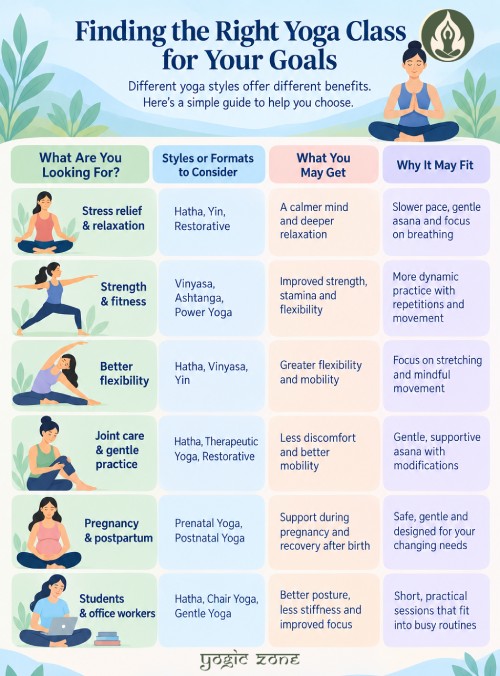
The table below provides a quick starting point. When shortlisting yoga classes, check whether the class offers a style or format that matches your goals and preferences. Before finalising your choice of yoga class, discuss your goals and expectations with the instructor to make sure the class is suitable for you.
| What Are You Looking For? | Styles or Formats to Consider | What You May Get | Why It May Fit |
|---|---|---|---|
| Stress relief & relaxation | Hatha, Yin, Restorative | A calmer, more relaxed experience | Slower movement, breathing, and longer-held postures can give you time to unwind. |
| Fitness & strength | Vinyasa, Ashtanga, Power Yoga | More strength, stamina, and physical activity | More dynamic sequences can provide a more physically active practice. |
| Greater flexibility & mobility | Hatha, Iyengar, Yin | Greater flexibility and mobility | A focus on alignment and more time spent in postures can support flexibility and mobility. |
| Specific health or therapeutic needs | Therapeutic Yoga, Iyengar, Private Sessions | A more individualised practice | Specialised instruction, modifications, and individual attention may be particularly useful. |
| Mindfulness & spiritual practice | Hatha, Kundalini, and meditation-based classes | Greater mindfulness and self-awareness | Breathing, meditation, or chanting may form part of the class. |
| Yoga that fits around work | Corporate Yoga, Shorter Sessions, Online Yoga Classes | A convenient way to practice around working hours | Workplace sessions, shorter classes, or online options can make regular practice easier. |
| Gentle & accessible practice for seniors | Chair Yoga, Gentle Hatha, Restorative Yoga | Gentle movement, mobility, and balance support | Slower, lower-impact practices and appropriate props can make classes more accessible. |
This table is a quick reference rather than a fixed recommendation. When shortlisting yoga classes, use it to identify the styles or formats that may match your goals and preferences.
If you want to understand the different yoga styles in more detail, read our guide to 10 Types of Yoga Explained.
Are you worried that you are not flexible enough?
Don’t let flexibility stop you from starting yoga. It is not a compulsory requirement. You can look for a beginner, hatha yoga, or gentle yoga class where the instructor gives you time to learn basic postures and offers modifications when needed.
If flexibility is your concern, read our article, Want To Practice Yoga, But Feel You Are Not Flexible Enough?
3. Know Your Class Level
If you have never practiced yoga before, the class level is one of the first things you should check.
You may see classes labelled “Beginner”, “Level 1”, “All Levels”, “Intermediate”, or “Advanced”. These labels can help you understand who the class is intended for, but they are not always used in exactly the same way by every studio or instructor.
Generally, a “beginner” or “level 1” class focuses on introducing foundational practices and giving students more time to understand basic postures and instructions.
An “All Levels” class may welcome beginners but can also include students with considerably more experience. If you are completely new to yoga, check the class description or ask the instructor whether they offer a dedicated beginner-only batch.
Intermediate and advanced classes are for those who are already familiar with yoga and may not be the right choice for beginners.
4. Consider the Pace and Intensity
Don’t rely on the advertised class level alone. The pace and intensity of a class can be just as important.
A beginner Vinyasa class, for example, may still involve more continuous movement than a gentle beginner hatha class.
If you would prefer more time to learn, look for descriptions such as “gentle,” “slow-paced,” “foundational,” “beginner-friendly,” or “slow flow.” If a class is described as dynamic, vigorous, or fast-paced, consider whether that matches your current experience and fitness level.
If the description does not give you enough information, ask the instructor before joining.
Do you have any doubts or questions about this article?? I am Yashvi Mehta, the author, and I would love to hear from you. Send us your question now!
5. Consider the Practicalities
Even if a class seems ideal, it needs to fit into your everyday life.
Consider:
- Location: Is it convenient for you to travel to the class regularly?
- Timing: Does the class fit around your work or other commitments?
- Duration: Can you comfortably allow enough time for the session?
- Format: Would you prefer an in-person, online, group, or private class? If you are unsure whether online or in-person learning would suit you better, read our guide on whether you should start online yoga or join a yoga class.
- Frequency: Can you realistically attend the class regularly?
For a working professional, for example, a class that fits comfortably into your schedule may be a better choice than one that sounds perfect but is difficult to attend consistently.
Ultimately, the best yoga class is one that fits comfortably into your routine and that you can attend regularly. If by now you know what you are looking for, you can browse our yoga classes and instructors directory to explore classes and instructors in India or continue reading for more tips on choosing the right class.
6. Look at the Instructor and Learning Environment
The instructor can have a significant influence on your experience, particularly when you are new to yoga. Before joining a class, take a little time to understand who will be teaching you and what kind of learning environment they provide. I recommend that you consider the following:
• Qualifications and Relevant Training
Look at the instructor’s qualifications and relevant yoga teacher training. Qualifications alone do not tell you everything about a teacher, but they can help you understand their formal training and areas of expertise.
• Teaching Experience, Particularly with Beginners
An instructor who has experience teaching beginners is likely to understand that new students may need more explanation, demonstration, and time to learn basic postures.
• Experience Relevant to Your Specific Needs
If you have a particular concern, health condition, previous injury, or other need that may affect your practice, discuss your needs with the instructor before joining rather than assuming that every yoga teacher has experience with every condition or requirement.
• Class Size and Individual Attention
Consider how many students will be attending the class. A smaller batch may give the instructor more opportunity to observe individual students and offer guidance, while a larger group may provide a different experience and atmosphere.
Think about how much individual attention you would like, particularly if you are a complete beginner.
• Learning Environment and Studio Culture
The environment in which you practice matters too. Look for a place where you feel comfortable asking questions and learning at your own pace.
If you are visiting a studio, consider whether it feels welcoming, clean, and well organised. You may also want to consider whether the overall atmosphere suits your expectations.
• Check Online Reviews
If you are searching online, check the reviews before shortlisting a class or instructor. Reviews can give you an idea of other students’ experiences with the instructor, class, and learning environment.
Look for recurring comments rather than relying on one particularly positive or negative review. At the same time, do not eliminate the instructor if you see a few negative comments.
A small number of reviews does not necessarily mean that an instructor is unsuitable; newer instructors or smaller classes may simply have fewer reviews.
• Watch Out for Red Flags
Some red flags can be identified before you join, while others may only become apparent after you have attended a class.
Before joining, be cautious if:
- The instructor or studio makes unrealistic promises about curing health conditions or achieving quick results.
- The instructor is unclear or unwilling to explain their qualifications and relevant experience.
- Pricing is unclear, or you feel pressured to purchase a large package or membership immediately.
Once you attend a class, pay attention to whether the instructor:
- Pressures you to perform poses beyond your ability.
- Dismisses your concerns or is unwilling to offer appropriate modifications.
- Makes you uncomfortable with physical adjustments or does not respect your boundaries.
You should feel comfortable asking questions and communicating your concerns. Good yoga teaching is not about pushing every student to do more; it is about helping students practice appropriately for their individual needs.
7. Ask or Try a Class Before You Commit
If you are still unsure whether a class is right for you, speak to the instructor before joining. Tell them that you are new to yoga and explain what you are hoping to get from your practice. They should be able to tell you whether their class is appropriate for your experience and expectations.
If a trial or introductory class is available, try it before enrolling in a membership or purchasing a package. If one is not offered, ask whether you can attend or observe a class before making a longer-term commitment.
After the trial class, ask yourself:
- Were the instructions clear?
- Was the pace comfortable?
- Did you feel supported as a beginner?
- Were modifications offered when needed?
- Did you feel comfortable with the instructor and the environment?
- Would you enjoy attending this class regularly?
You don’t have to stay with the first class you try. Finding the right yoga class can sometimes take a little trial and error.
Finding the Right Yoga Class Begins Today
I hope this guide has helped clear some of the confusion around finding a yoga class that is right for you. You don’t need to find a perfect class from the very beginning.
Start with what feels appropriate for your experience and needs, and give yourself some time to find a class and instructor you feel comfortable with.
The right class is one that matches your current needs, gives you appropriate guidance, and makes you want to continue your yoga practice.
Do you have any doubts or questions about this article?? I am Yashvi Mehta, the author, and I would love to hear from you. Send us your question now!
Frequently Asked Questions About Finding the Right Yoga Class
How do I choose the best yoga studio or instructor?
Consider the instructor’s qualifications, teaching experience, class approach, reviews, class size, and environment. Also consider the studio’s location, timing, and whether the classes suit your goals and experience.
What factors should I consider when selecting a yoga class?
Consider your goals, preferred style, experience level, pace and intensity, instructor, class size, location, and timing. If you have specific needs, also check whether the instructor can accommodate them.
How do I know if a yoga class is right for my fitness level?
Check the advertised class level, but don’t rely on it alone. Read the class description and consider its pace and intensity. If you are unsure, ask the instructor whether the class is suitable for your level of fitness.
How do I find a good yoga class near me?
Search for yoga classes and instructors in your area, then compare their styles, class levels, schedules, reviews, and instructor credentials. Your local yoga directory can also help you find suitable options.
What type of yoga class should I take if I am a complete beginner?
Look for a “Beginner” or “Level 1” class, or a gentle Hatha class. Choose a class where the instructor gives you enough time to learn basic asanas and provides appropriate guidance and modifications.
How can I tell if a yoga class is suitable for my goals?
Start by identifying what you want from yoga, such as flexibility, fitness, relaxation, mindfulness, or better health. Then look for a class whose style, pace, and format match those goals.
How important are yoga class size and individual attention?
Class size can affect how much individual attention you receive. Smaller classes may allow the instructor more opportunity to observe your practice and offer guidance, while larger classes may provide a stronger group atmosphere.
Should I try a yoga class before enrolling?
Yes, if possible. A trial or introductory class lets you experience the instructor, teaching style, pace, and learning environment before enrolling. If no trial is offered, ask whether you can attend one class before enrolling.
How do I modify or choose a yoga class if I have an injury or back pain?
Discuss your condition with the instructor before joining and look for someone with relevant experience. They can help determine whether the class is appropriate and whether suitable modifications can be made.
What warning signs or red flags indicate a bad yoga studio or instructor?
Be cautious of unrealistic health claims, pressure to perform beyond your ability, unwillingness to offer modifications, unclear qualifications or pricing, and instructors who dismiss your concerns or do not respect your boundaries.