
This article is written by Chintan Mehta. Certified yoga teacher with a 900-hour advanced teachers training | Diploma in Yoga from Mumbai University | Individual and group yoga trainer, therapist, counsellor, and meditation coach. Know more about Chintan Mehta.
Starting yoga at home can be a convenient way to build a regular practice. More people are choosing online yoga classes, recorded sessions, or their own home routine because they can practice at a time and place that suits them.
If you are wondering what equipment you need for yoga at home, whether it’s a yoga mat, blocks, straps, special clothing, or all of them, you are not alone. The good news is that you don’t need a fully equipped yoga space to start. A few basics are enough, and you can add other equipment later as your practice develops.
As an experienced and qualified yoga instructor who works with beginners regularly, I have realised that beginners often think they need more equipment than they actually do. I will help you understand what you really need for a basic beginner home yoga setup.
What Do You Really Need to Start Yoga at Home?
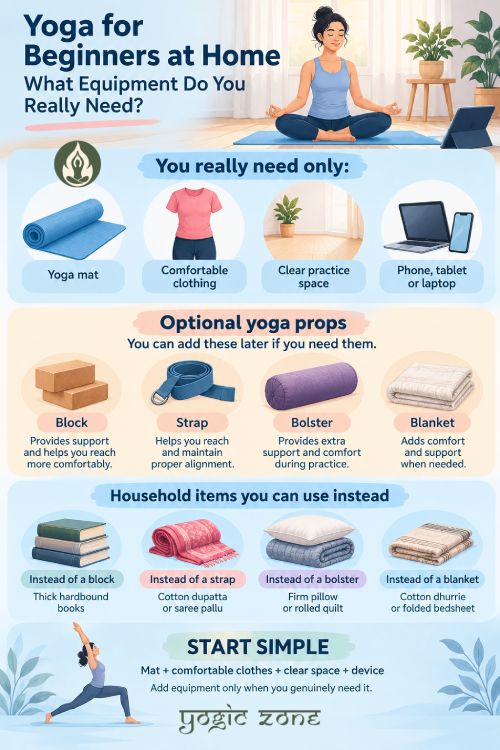
Beginners can start yoga at home with a few basic items: a yoga mat, comfortable clothing, enough space to move safely, and a laptop, tablet, or smartphone for online classes.
You do not need to buy every item sold as yoga equipment before you begin. In most cases, it is better to start with the basics and understand what you actually need for your practice.
Your requirements may also depend on the type of yoga you practice and whether you are learning through live online classes, recorded sessions, or guidance from an instructor. If you are looking for an instructor or class, you can also browse our Yoga Classes & Instructors Directory to explore options across India.
A Yoga Mat: The One Thing Worth Investing In
A good yoga mat is one of the few things I would insist that you invest in. It gives you a stable surface to practice on as a beginner and can make asanas feel more comfortable and secure.
Your mat is the foundation of your home practice. It provides some cushioning between your body and the floor and gives you a dedicated surface to practice on.
When choosing a yoga mat, consider its grip, thickness, size, and the type of surface where you will use it. If you are buying your first mat, our guide on what to look for in a yoga mat explains these factors in more detail.
You also do not need to buy the most expensive yoga mat available. If you are just starting, look for a mat that provides adequate grip and stability without spending more than necessary.
If you are unsure which type of mat would suit you, our Yoga Mats section can help you understand the different options before you buy.
What Should You Wear for Yoga at Home?
Wear comfortable, breathable clothing that allows you to move freely. You do not need specialised clothing to start practicing yoga at home.
Your clothing should allow you to move without constantly adjusting it. Leggings, yoga pants, shorts, or other comfortable, flexible clothing can work, depending on your preference and the type of practice.
If you already have comfortable clothing that works well for movement, there is no need to buy a new yoga outfit when you are just starting.
As your practice develops, you may find that dedicated yoga wear is worth considering, particularly if you practice regularly. Yoga clothing is designed to allow greater freedom of movement and remain comfortable during practice. Our Yoga Wear section will help you understand how to select clothes for practice.
A few things you should keep in mind:
- Avoid stiff or heavy fabrics: They can restrict movement and make some asanas uncomfortable.
- Avoid overly loose clothing: Loose tops or bottoms can move around during practice and may get in the way.
- Be careful with drawstrings and bulky waistbands: A large knot or thick drawstring can press into your stomach when you lie on your back for relaxation poses.
- Keep jewellery to a minimum: Necklaces, watches, bracelets, or large earrings can get in the way during certain asanas.
Yoga is generally practiced barefoot, so special footwear is usually unnecessary.
Do You Need Yoga Props at Home?
Yoga props such as blocks, straps, bolsters, and blankets can be useful, but most beginners do not need to buy all of them when starting yoga at home. Our guide to yoga props for beginners explains which props can be useful and how they can support your practice.
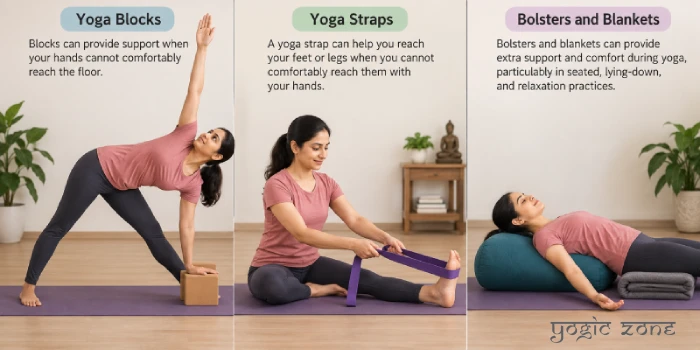
Props can provide support, help you modify an asana, or make certain movements more accessible. Your instructor may also recommend a particular prop if it’s useful for your practice. I have briefly explained how these props can help you in your practice.
• Yoga Blocks
Blocks can provide support when your hands cannot comfortably reach the floor. For example, in some standing asanas, you can place a block under your hand so you do not have to bend as far. They can also provide support in other asanas.
• Yoga Straps
A yoga strap can help you reach your feet or legs when you cannot comfortably reach them with your hands. It can also help you hold certain positions more comfortably.
• Bolsters and Blankets
Bolsters and blankets can provide extra support and comfort during yoga. They can be particularly useful in some seated, lying-down, and relaxation practices.
Do you have any doubts or questions about this article?? Chintan Mehta, the author, would love to hear from you. Send us your question now!
What Accessories Can You Skip When Starting Yoga?
You can skip most specialised yoga accessories when starting, but I would recommend investing in a good yoga mat. Begin with the basics and add other equipment when it serves a genuine purpose in your practice.
Beginners often feel they need a complete collection of yoga equipment or a yoga kit before they can start. In reality, you can practice many basic asanas without immediately buying blocks, straps, bolsters, and other accessories.
If you do need support for a particular asana, you may sometimes use a suitable household item instead of purchasing a yoga prop straight away.
| Yoga Prop | Household Alternative |
|---|---|
| Strap | Cotton dupatta or saree pallu |
| Block | Thick hardbound books |
| Bolster | Firm pillow or rolled quilt |
| Blanket | Cotton dhurrie or folded bedsheet |
Make sure that your household substitutes are stable and suitable for the particular movement. If you are unsure, ask your instructor before using it.
You also don’t need expensive clothing or a premium yoga mat simply because you are starting yoga. Focus first on comfort, stability, and what your instructor recommends.
As your practice develops, you may discover that a particular prop can make certain asanas more comfortable or help with a modification. That is when you can consider adding it.
What Tech Device Do You Need for Online Yoga at Home?
A phone, tablet, or laptop is enough for most online yoga classes. Choose a device that lets you see your instructor clearly.
- Screen size: A larger screen can be more comfortable for some people, but you do not need to buy a new device just for your yoga sessions. Your existing phone can work perfectly well if it provides a clear enough view.
- Device position: Place the device safely at a comfortable distance so you can see your instructor clearly without repeatedly moving towards the screen.
- Camera position: If your instructor needs to see you during a live class, position the device so that they can see most of your body and practice area as clearly as possible.
- Internet connection: A stable internet connection is important for live classes. If your connection is unreliable, interruptions can make it difficult to follow the instructor.
- Online platform: You may use platforms such as Zoom, YouTube, or dedicated yoga apps, depending on what your instructor prefers to conduct the class.
Do You Need a Special Space for Yoga at Home?
No, you do not need a dedicated yoga room. All you need is a reasonably quiet space with enough room to move comfortably and a stable surface for your practice.
- Clear the area: Before starting your home yoga session, check the area around your mat. Move away any furniture or objects that could get in your way or that you could accidentally knock into while practicing.
- Check the floor: The floor should be stable and suitable for your mat. If your mat moves around during practice, check the surface underneath and consider whether you need a mat with an anti-slip underside.
- Keep the space comfortable: Good ventilation and comfortable lighting can make your practice more pleasant, but you do not need to create a studio-like environment.
- Make use of the space you have: If you live in a small home, don’t let the lack of a dedicated room stop you. A suitable section of a bedroom, living room, or another clear area can be enough.
How to Build Your Home Yoga Setup Gradually
Start with the basic equipment you need to practice comfortably, then add equipment as your practice develops or your instructor recommends it.
A simple beginner home yoga setup could include:
- A yoga mat
- Comfortable clothing
- A clear practice space
- A phone, tablet, or laptop to follow the online class
You can add equipment such as blocks, straps, bolsters, or blankets when you have a genuine reason to use them.
This approach can also help you avoid buying equipment based only on what you see in other people’s home yoga spaces or social media reels. Your requirements may be quite different from theirs.
Since you are learning through an online yoga class, your instructor may also be able to tell you which props would be useful for the particular asanas or practices being taught.
So, Are You Ready to Start Yoga at Home?
You don’t need a fully equipped yoga studio at home to begin. Start with what you have, practice consistently, and add equipment when it genuinely becomes useful.
Most importantly, don’t let the idea of buying equipment become a barrier to starting yoga. Your practice should develop according to your needs, your abilities, and the guidance of your instructor.
Do you have any doubts or questions about this article?? Chintan Mehta, the author, would love to hear from you. Send us your question now!
Frequently Asked Questions About Yoga for Beginners at Home
Can you do yoga at home without a mat or props?
Yes. Beginners can practice many basic asanas at home without props. However, a good yoga mat is worth investing in for a stable, comfortable practice surface.
What equipment do I really need to start yoga at home?
You only need a yoga mat, comfortable clothing, enough space to move safely, and a phone, tablet, or laptop if you are following an online class. Blocks, straps, and other props can be added later.
What household items can I use instead of yoga props?
Thick hardbound books can substitute for blocks, while a cotton dupatta or saree pallu can work as a strap. A firm pillow or rolled quilt can substitute for a bolster.
Is it worth buying a yoga prop set for beginners?
Not usually. You can start with a mat and add individual props when you find they genuinely help with an asana or when your instructor recommends them.
Do I need special clothes to practice yoga at home?
No. You do not need special yoga clothes to start. Wear comfortable, breathable clothing that allows you to move freely without restricting movement or needing constant adjustment.
What should I look for in a yoga mat for home practice?
Choose a mat with good grip, suitable cushioning, and enough stability for your floor. On hardwood, check that it does not slide; on carpet, consider how well the mat stays stable on the surface.
How to set up a small space at home for beginner yoga without buying excess equipment
Clear enough floor space to move comfortably, choose a stable surface, and ensure adequate lighting and ventilation. You don’t need a dedicated yoga room or a large collection of equipment.