
This article is written by Snehal Gaikwad Bankar. Yoga Trainer & Therapist | Hatha yoga, therapeutic yoga, Prenatal & Postnatal Yoga | Ayurvedic Nutrition & Lifestyle Wellness. Know more about Snehal Gaikwad Bankar.
Going to your first yoga class can make you feel a little nervous and apprehensive. Over the years of teaching beginners, I have noticed that many people have the same questions before attending their first yoga class: What should I wear? Am I dressed appropriately? What should I carry with me? Do I need to know any yoga asanas? Will I be able to keep up with the class?
The good news is that you do not have to stress about these questions. Most of the questions running through your mind are easy to answer, but a little preparation beforehand can help you feel more relaxed.
As a qualified and experienced yoga instructor, I have put together these practical first yoga class tips to help you prepare for your first session and know what to keep in mind before and during the class.
1. What You Should Know Before Your First Yoga Class
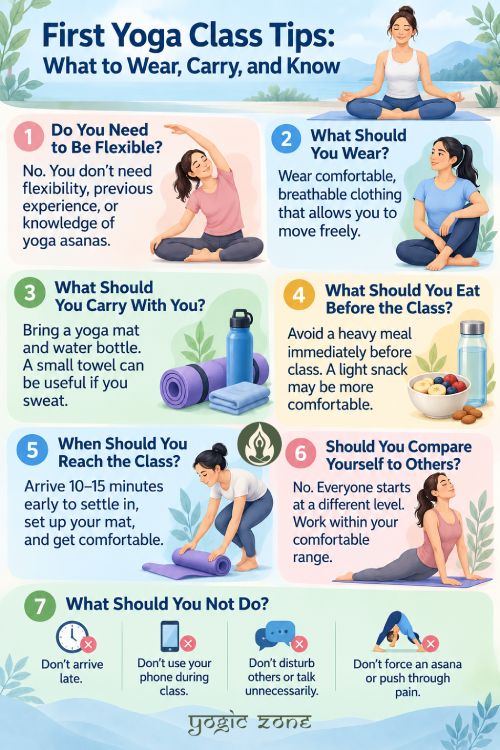
You do not need previous yoga experience, flexibility, or knowledge of yoga asanas to attend your first class. Your instructor will guide you through the practice and explain what you need to do.
If you are completely new to yoga, you may not recognise the names of different asanas or understand every instruction straight away. That is perfectly normal, since you have joined a yoga class for beginners. Give yourself time to become familiar with the instructor’s way of teaching and the movements.
You also do not need to be flexible to start yoga. People come to a yoga class with different levels of flexibility, strength, balance, and physical ability. Your first yoga class is an opportunity to learn and become familiar with the practice, not a test of how well you can perform an asana.
Read our guide, Do You Need to Be Flexible to Start Yoga?, to clear any doubts you may have about flexibility and yoga.
If you have any concerns that may affect your practice, discuss them with your instructor before the class. This gives the instructor an opportunity to understand your needs and suggest appropriate modifications or precautions where necessary.
2. What to Wear for Your First Yoga Class
Wear comfortable, breathable clothing that allows you to move freely without constantly needing to adjust it. Women can wear comfortable yoga pants or other flexible clothing with a suitable top.
A supportive sports bra or comfortable inner layer can be useful, particularly for practices involving more movement. You can also explore our Yoga Wear section for helpful articles on yoga wear for women.
Men can wear comfortable track pants, yoga pants, or other flexible clothing with a T-shirt or suitable top. The important thing is that your clothing should allow you to move comfortably without being excessively loose or restrictive.
Your choice of clothes can also depend on the style of yoga and the temperature of the classroom.
Yoga is generally practiced barefoot, so you usually do not need special footwear. If the classes or instructor have specific requirements, check beforehand.
You may also want to keep jewellery, watches, and other accessories to a minimum. Large or loose items can become uncomfortable or get in the way while moving or practicing certain asanas.
3. What to Carry to Your First Yoga Class
For most yoga classes, a yoga mat and water bottle are the main things you may carry. A small towel can also be useful, particularly if you sweat.
Before buying anything, check with the instructor to find out what equipment they provide. Some classes provide mats and basic yoga props, but I would advise you to carry your own personal mat for hygiene reasons.
A good yoga mat does not have to be expensive and can be a worthwhile investment if you plan to continue practicing yoga.
Our beginner’s guide on what to look for in a yoga mat can help you choose one that suits your practice.
You may also come across props such as blocks, straps, bolsters, or blankets. These can be useful for support and modifications, but you do not need to buy every yoga accessory before attending your first class.
The aim is to arrive prepared, not to turn your first class into a shopping exercise. Start with the basic equipment you need and add things like blocks and straps later if they become useful for your practice.
4. Should You Eat Before Your First Yoga Class?
Avoid attending a yoga class immediately after a heavy meal. Give your body enough time to digest so that you can move and practice comfortably.
There is no single eating schedule that works for everyone. How much time you need after eating can depend on the size of the meal, how your body responds to food before physical activity, and the type of practice.
If you are hungry before class, a light snack may be more comfortable than attending on an empty stomach. Choose something you know your body tolerates well rather than trying unfamiliar foods immediately before your first class.
It is also a good idea to stay hydrated, but avoid drinking a large amount of water immediately before the session. Take small amounts as needed and listen to your instructor’s advice about hydration.
Do you have any doubts or questions about this article?? I am Snehal Gaikwad Bankar, the author, and I would love to hear from you. Send us your question now!
5. Arrive Early and Let Your Instructor Know You Are a Beginner
Arriving a little early gives you time to settle in, find your place, set up your mat, and speak to the instructor before the class begins. Let the instructor know that you are new to yoga so they can keep your experience level in mind.
This is also the right time to share any relevant previous injuries, health issues, physical limitations, or other concerns that could affect your practice. Your instructor can then take these into consideration and suggest suitable modifications or precautions where appropriate.
You do not need to give the instructor a long medical history. Share information that is relevant to your ability to participate safely and comfortably in the class. If you are unsure whether something is relevant, it is better to mention it and ask the instructor.
6. Yoga Class Etiquette: What Beginners Should Know
- Arrive on time: Give yourself enough time to settle in and prepare before the class begins.
- Keep your phone silent: Avoid distractions for yourself and others during the session.
- Respect other students’ space: Keep your mat and belongings within your own space and be mindful of others around you.
- Follow your instructor’s guidance: Listen to the instructions and ask if you are unsure about anything.
- Use the restroom before your yoga class: If you need to use the restroom, it is better to do so before the session begins.
- Avoid unnecessary talking or chatting: Keep conversations to a minimum once the class is about to begin and during the practice.
7. How to Approach Your First Yoga Class
Follow the instructor’s guidance, work within your comfortable range, and do not feel that you need to keep up with everyone around you. It is perfectly fine to take a break or ask for help when you need it.
You may find some movements easier than others, and some asanas may feel unfamiliar at first. If you are unsure about an instruction or cannot comfortably perform an asana, ask the instructor for clarification or a modification.
Try not to judge your practice based on how another student is performing. Someone who leads an active lifestyle may naturally have greater flexibility, balance, or strength, or may already be familiar with certain asanas.
Most importantly, do not force yourself into a posture. Yoga should not be about pushing through pain or trying to match another student’s range of movement. You can modify the posture, reduce the range of movement, or simply rest if needed.
Your instructor may also offer several ways to approach an asana. Do not assume that taking an easier modification means you are doing less yoga. Modifications can help you practice in a way that is more appropriate for your current ability.
8. Don’t Worry About Getting Everything Right
Your first yoga class is an opportunity to learn, so you do not need to perform every asana perfectly or remember every instruction.
You may lose track of the sequence, place your hands or feet incorrectly, or need to look around to understand what others are doing. These are normal experiences when you are learning something new.
It may also take a few sessions to become familiar with the instructor’s way of giving instructions, the names of different asanas, and the flow of a session. Give yourself time to develop that familiarity rather than expecting everything to be clear immediately.
Try to focus on listening, learning, and becoming comfortable with the practice. If something does not feel right or you do not understand what you are being asked to do, ask your instructor rather than simply copying the person next to you.
Every student’s first class is a different experience. What matters is that you start at a level that is comfortable for you and gradually build confidence in your practice.
Ready for Your First Yoga Class?
I hope my tips have been helpful and have helped you feel a little more relaxed. A little preparation and knowing what to expect at your first yoga class can make your experience much more enjoyable.
Most importantly, remember that you are there to learn. You do not need to be flexible, experienced, or able to perform every yoga asana. Start at your own level, listen to your instructor, and give yourself time to become comfortable with your practice.
If you are looking for a class to get started, you can explore our Yoga Classes & Instructors Directory to find classes and instructors in India.
Do you have any doubts or questions about this article?? I am Snehal Gaikwad Bankar, the author, and I would love to hear from you. Send us your question now!
Frequently Asked Questions about Your First Yoga Class
What should I wear to my first yoga class if I don’t have yoga pants?
You do not need special yoga pants. Wear comfortable, breathable clothing that allows you to move freely without being too loose or restrictive.
Do I need to bring my own mat to my first yoga class?
Not necessarily. Check with the instructor or studio first, as some provide mats and basic props. However, carrying your own mat can be preferable for personal hygiene.
Should I eat or drink water before going to a yoga class?
Avoid a heavy meal immediately before class and give your body time to digest. Stay hydrated, but avoid drinking a large amount of water just before the session.
What should I expect during my very first beginner yoga class?
A beginner class may start with an introduction to the yoga style and the basic asanas you will practice. This is usually followed by warm-up movements, the main practice, and a relaxation period such as Savasana at the end.
What are the essential things to pack in a gym bag for a beginner yoga class?
A yoga mat and water bottle are usually the main essentials. A small towel can also be useful. Check with your instructor or studio about any equipment they provide.
How early should I show up for my first studio yoga class?
Arrive 10–15 minutes early so you have time to settle in, find your place, set up your mat, and get comfortable before the class begins.
Is it better to do yoga barefoot or wear grippy socks?
Yoga is generally practiced barefoot, so you usually do not need special footwear. If your instructor or studio has specific requirements, check with them beforehand.
What yoga studio etiquette rules should every beginner know before going?
Arrive on time, keep your phone silent, respect other students’ space, follow your instructor’s guidance, and ask for help when needed. Check with the studio if it has specific rules.
What should I do if I cannot do a pose or feel too inflexible during class?
Do not force the posture or compare yourself with others. Ask your instructor for a modification, reduce your range of movement, or simply rest if needed.
Should I take off my jewellery and shoes before entering the yoga room?
Yoga is generally practiced barefoot, so shoes are usually removed before practice. It is also best to minimise jewellery, watches, and loose accessories that may get in the way.