
M.A. Yoga | Certified in Naturopathy & Acupuncture | Patanjali Ashtanga Yoga | Prenatal Yoga | 5+ years experience in Therapeutic Yoga & Wellness | Know more about Khushee Mandora.
Ashtanga Yoga is one of the most powerful styles of yoga for building strength, improving flexibility, and calming the mind. If you are looking for a physical and mental transformation, then Ashtanga Yoga is just right for you.
With regular practice, you will start noticing real changes within just a few weeks. Better stamina, greater flexibility, breath control, and clarity of thought are just a few of the many Ashtanga Yoga benefits.
As a yoga educator with an M.A. in Yoga and training in Ashtanga and therapeutic yoga, I follow the principles of Patanjali yoga as described in the Yoga Sutras of Patanjali. In this article, I will share seven benefits you may notice within just a few weeks, even if you are completely new.
What Is Ashtanga Yoga?
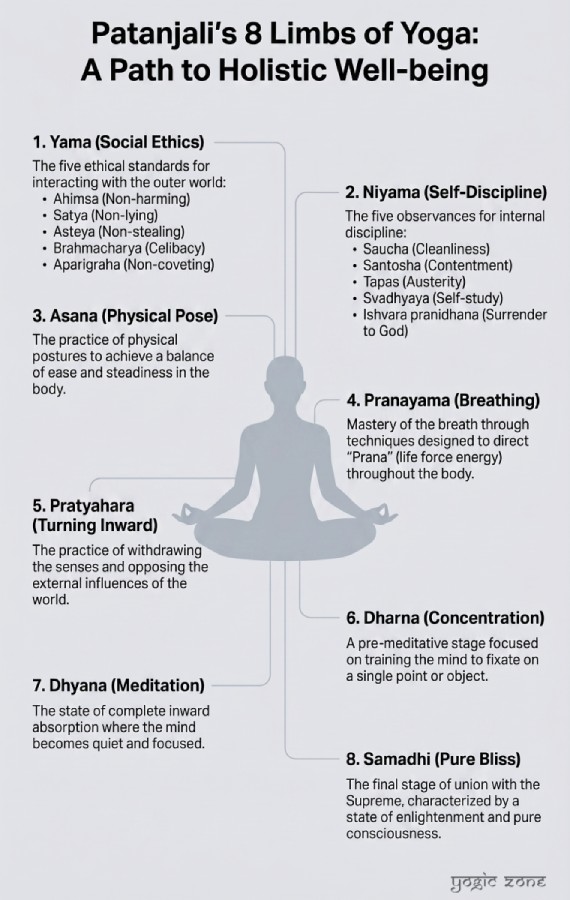
The word “Ashtanga” comes from the eight-limbed path of yoga described by Patanjali. The purpose of Patanjali yoga is to understand and steady the mind.
This idea is expressed in the Yoga Sutras as: “योग चित्त वृत्ति निरोध”
It means calming the fluctuations of the mind, including thoughts, emotions, and reactions, to experience greater mental clarity and peace.
The infographic below gives a simple overview of the eight limbs of Ashtanga yoga described by Patanjali.
While modern yoga systems sometimes use the term Ashtanga in different ways, including dynamic styles often called Vinyasa, this article focuses on the classical understanding of Ashtanga yoga based on Patanjali’s teachings.
With regular practice, students practicing Ashtanga can build strength, focus, and steadiness, as it combines steady, controlled breathing (sometimes called Ujjayi breathing), movement, and light abdominal (core) engagement in the same set order every time.
What to Expect in Your First Ashtanga Class
When you walk into your first Ashtanga class, your teacher will guide the entire group through the same Ashtanga yoga sequence of postures, calling out each movement and breath count as you go.
You do not need to memorise the Primary Series beforehand; simply follow your yoga teacher, move at your own pace, and let your teacher know if you have any injuries or health conditions before class begins.
In my classes, I often see beginners settle into the flow within the first few sessions, even if it feels unfamiliar at the start.
Do you have any doubts or questions about this article?? I am Khushee Mandora, the author, and I would love to hear from you. Send us your question now!
Ashtanga Yoga Benefits and Precautions
Ashtanga Yoga works on both body and mind, and these seven benefits show how even a few weeks of practice can make a noticeable difference.
1. Improves Flexibility Even If You Feel Stiff
Many people assume yoga is only for those who are already flexible. In my experience, the opposite is true. Students who start with a stiff body often see the most noticeable progress because the practice works with your body as it is.
- Asanas like Uttanasana (Standing Forward Fold) and Trikonasana (Triangle Pose) slowly loosen the back thigh muscles and hips over weeks of regular practice.
- The warm breathing in each session helps your muscles soften and stretch more easily than they would without proper warm-up.
- In weeks one and two, expect some stiffness and mild soreness after class. This is normal and not a sign that something is wrong.
- By weeks three and four, you will notice small but real improvements, like reaching below your knees when you could barely reach them earlier or sitting straighter without effort.
If flexibility is your priority, you can explore this detailed guide on Ashtanga Yoga for beginners: 6-day routine for stiffness to flexibility.
Beginner Tip: Loop a dupatta or yoga strap around your feet if you cannot reach them. Every experienced practitioner uses props when needed; there is no shame in it. Read how yoga straps can help you with your practice.
Precaution: Move within a comfortable range at all times. You should feel a gentle stretch, not sharp pain, especially behind the knees or in the lower back.
2. Boosts Stamina and Energy Levels
It may sound surprising, but one of the most common things students tell me after a few weeks of Ashtanga is that they feel more energetic, not drained.
- The continuous flow of movement with breathing gradually builds stamina without the strain of running or intense gym workouts.
- Lung capacity improves steadily as breathing trains the respiratory muscles to work more efficiently.
- Students who used to feel tired after long office hours find that a morning practice helps them stay energetic through the day.
- Over time, the body adapts, and what once felt exhausting begins to feel energising
Beginner Tip: Rest in Balasana (Child’s Pose) whenever you feel the need. Resting is not giving up; it’s just listening to your body.
Precaution: Stop and rest if you feel dizzy, short of breath, or lightheaded at any point. Inform your instructor immediately.
3. Improves Sleep, Often Within the First Two Weeks
Many beginners notice better sleep within the first 10 to 14 days of consistent practice. The combination of breath and physical effort helps the body relax more deeply at night.
- The flow of Surya Namaskar (Sun Salutations) and standing asanas helps release built-up physical tension from long sitting hours.
- Steady breathing slows down the mind , making it easier to unwind after a busy or stressful day. one of the most underrated benefits of Ashtanga yoga for stress relief
- In the first week, you may feel physically tired after practice, which naturally deepens sleep quality.
- By the second week, many students report falling asleep faster and waking up feeling genuinely refreshed rather than groggy.
Beginner Tip: Try practicing in the morning or early evening, and keep your dinner light on practice days for better sleep quality.
Precaution: Avoid practicing very late at night, as the heat and intensity may make it harder to fall asleep.
4. Calms the Mind and Reduces Stress
With busy routines and daily responsibilities, this is the benefit students value the most. Ashtanga does not just tire the body; it helps quieten the mind, making it one of the most effective forms of yoga for stress relief. (Read more on yoga for stress relief)
- The steady rhythm of breathing during the Ashtanga sequence creates a calm, meditative state that is hard to achieve on your own.
- Steady breathing activates the body’s natural relaxation response, gradually reducing the anxiety that often stays in the background.
- Many students say they don’t react as strongly to things anymore, not because situations have changed, but because they feel calmer within.
- With regular Ashtanga yoga practice, emotional steadiness gradually becomes natural; you begin to feel calm without having to make an effort.
Beginner Tip: If your mind wanders constantly during practice in the early weeks, that is completely normal. Simply bring your attention back to your breath.
Precaution: If you are managing clinical anxiety or depression, Ashtanga can be a meaningful support alongside professional treatment.
Important: Please do not reduce or stop any medication without consulting your doctor.
5. Improves Posture and Reduces Desk-Related Pain
If you spend most of your day sitting at a desk, your spine pays the price. Ashtanga practice gradually corrects this by strengthening the back muscles and expanding the chest.
- Asanas like Bhujangasana (Cobra Pose) and Urdhva Mukha Svanasana (Upward-Facing Dog) gently reverse the forward hunching that develops from hours spent looking at a screen.
- Standing postures like Tadasana (Mountain Pose) and Virabhadrasana I (Warrior I) train your spine to stay upright naturally, even when you’re not practicing. This yoga posture correction effect often surprises new students.
- Most desk workers notice less neck and shoulder stiffness within two to three weeks of regular Ashtanga practice (Read this article if you are having neck and shoulder issues).
Precaution: If you feel any sharp pain in the lower back during backbend postures, stop immediately; never push through lower back pain.
6. Supports Weight Management Naturally
Among the well-known benefits of Ashtanga yoga is its support for healthy weight management.
Ashtanga does not promise quick weight loss, but consistent practice does create real, lasting changes in how your body looks and feels. The heat generated during each session, combined with continuous movement, raises your metabolism over time.
- The body continues burning energy for several hours after a session.
- Regular Ashtanga yoga practice gradually builds lean muscle, which supports a healthier body composition.
- Many students find their appetite becomes steadier and food cravings reduce on practice days.
- For Indian students: simple home meals like dal, sabzi, and roti pair well with this practice; no special diet is needed.
Beginner Tip: Drink coconut water or have a small cup of haldi doodh (turmeric milk) after practice. Both support recovery without heaviness.
Precaution: Avoid skipping meals in the hope of faster results. Your body needs fuel to practice safely and consistently.
7. Supports Hormonal Balance and Metabolic Health
One of the noticeable Ashtanga yoga benefits is its effect on how the body manages stress and energy. Regular movements through the Ashtanga sequence, combined with steady breathwork and Surya Namaskar (Sun Salutations), helps regulate stress hormones, and that has an effect on many other systems in the body.
- For women managing PCOD, Ashtanga reduces cortisol and improves insulin sensitivity, supporting more regular cycles and reduced symptoms.
- For women above 50, this practice can help support bone strength during and after menopause.
- Traditional Ashtanga practice also encourages women to rest for the first two to three days of their menstrual cycle. (I always tell my students to rest if your body demands it; not a strict rule.)
- For men: managing stress through consistent practice often leads to steadier energy levels and reduced stress-related weight gain.
Research published in PMC suggests that regular Ashtanga yoga practice may influence brain metabolism, with changes observed in areas related to emotion, attention, and motor control.
Precaution: Ashtanga is a supportive practice, not a replacement for medical care. Always continue your prescribed treatment alongside practice.
Safety: Let your teacher know about any hormonal conditions before you begin. A good teacher will adjust the pace and asanas accordingly.
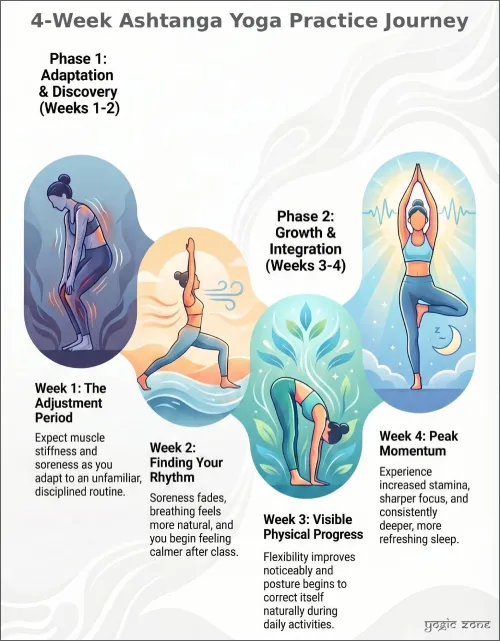
4‑Week Ashtanga Yoga Practice Journey: Weekly Progress and Benefits
The first four weeks of Ashtanga yoga for beginners can sometimes feel uncomfortable. But with regular practice, you begin to notice positive changes each week in your body and mind. Here is a quick look at the journey.
| Timeframe | Physical Transformation (Body) | Cognitive & Emotional Shift (Mind) | Noticeable Progress Markers |
|---|---|---|---|
| Week 1 | Activation: Mild soreness in shoulders and hamstrings; increased metabolic heat (Agni). | Learning Curve: Managing frustration with the breath and sequence. | Overcoming the "I am not flexible" mental barrier. |
| Week 2 | Adaptation: Reduced muscle fatigue; breath starts to regulate heart rate. | Stress Release: Lowered cortisol; feeling less "reactive" to traffic/work stress. | Establishing a consistent "Sadhana" (daily habit). |
| Week 3 | Alignment: Visible posture correction; core engagement (Bandhas) feels less forced. | Dharana (Focus): Mental "chatter" settles; the sequence becomes a moving meditation. | Noticing clothes fit better due to increased muscle tone. |
| Week 4 | Vitality: Significant stamina boost; improved digestion and deep "Yogic sleep." | Clarity: Sharp mental focus; mastery of the first few poses of the Primary Series. | Feeling the "Ashtanga Glow" (Tejas) in daily life. |
Ashtanga Yoga Safety Tips for Beginners
Before getting into a regular Ashtanga routine, beginners should be aware of a few common areas where they may feel strain. Most of these are easy to avoid if you move carefully and don’t rush through the practice.
| Area | Common Issue | Prevention Tip |
|---|---|---|
| Wrists | Wrist strain in weight-bearing poses | Spread your fingers and distribute the weight across your palms |
| Knees | Discomfort in Padmasana (Lotus Pose) or cross-leg positions | Avoid forcing half or full Padmasana; keep it comfortable |
| Lower back | Pressure or compression | Gently engage your abdomen and avoid putting too much pressure on the lower back |
In my classes, I often see these issues come up, especially in the early weeks, but with small adjustments, they can be easily avoided.
Safety:
- Please consult your doctor first if you have a slipped disc, uncontrolled blood pressure, recent joint surgery (in the last three to six months), fever, or are in your first trimester of pregnancy.
- For Type 2 Diabetes, monitor blood sugar carefully, especially when practicing on an empty stomach.
The real Ashtanga yoga benefits are not just physical changes but how you feel every day. In my years of teaching experience, I have observed that students who practice Ashtanga consistently, even with a modified schedule, notice meaningful changes within weeks.
You don’t need to be flexible, spiritual, or have 90 minutes daily. Start as you are, keep it simple, and enjoy the benefits.
Do you have any doubts or questions about this article?? I am Khushee Mandora, the author, and I would love to hear from you. Send us your question now!
Frequently Asked Questions About Ashtanga Yoga Benefits
Can I practice Ashtanga Yoga daily if I am not flexible?
Yes, you can. Flexibility is built through practice, not required to start flexible. Go slow, respect your limits, and stay consistent, your body will gradually loosen up without forcing or strain.
Is Ashtanga Yoga better than Gym for weight loss and toning?
Yes, it can be. Ashtanga builds strength, burns calories, and improves metabolism. Unlike the gym, it also enhances mobility and breath control, so you tone up while feeling lighter and more balanced.
Should I learn Ashtanga Yoga at home or join a Mysore-style class?
Ideally, start with a Mysore-style class. You will get personalised guidance and safe adjustments. Once you learn the sequence well, you can confidently continue your practice at home.
I have heard Ashtanga Yoga is too rigid and can cause injuries; how do I know if my body is ready for the Primary Series?
Generally, it’s safe if you start gradually. You don’t need the full Primary Series on day one. A good teacher will pace you step-by-step, helping you build strength and avoid injury.
Can Ashtanga Yoga help with belly fat and PCOS symptoms better than regular Hatha yoga?
Yes, it can support both. The dynamic flow boosts metabolism and circulation, which may help with fat loss and hormonal balance. Consistency matters more than style—practice regularly for results.
I struggle with a high-stress corporate job, will the intensity of Ashtanga make me more tired or actually give me energy?
It will give you energy. While it feels intense at first, Ujjayi breathing led rhythm calms your mind and improves stamina. Most practitioners feel more focused and less drained after practice.
What are the realistic physical changes I will see in my body after 4 weeks of consistent Ashtanga practice?
Expect stronger arms, a tighter core, better posture, and improved sleep. Visible toning begins around week three. Flexibility gains follow shortly after. Breathing practice improves lung capacity.
Is it culturally disrespectful or ‘wrong’ to modify Ashtanga poses with blocks and straps if I can’t do the full bind?
No, it’s absolutely fine, even Mysore teachers recommend them, it’s not disrespect to the practice. Modifications help to keep body alignment correct and build safety until your body is ready for deeper expressions.
Do I have to follow a strict Sattvic diet and wake up at 4 AM to get the mental benefits of Ashtanga?
No, it’s not necessary. While those eating habits can help, the real benefits come from consistent practice. Start with regular movement and breathwork to improve mental clarity.