
Yoga Instructor | M.Sc. Yoga Science | Therapeutic Yoga | Panchakarma & Shatkarma | Meditation & Breathwork | 3+ yrs teaching incl. therapy & student sessions | Know more about Ayush Kothiyal.
Most people starting yoga think about buying a mat and comfortable yoga wear, but very few give a thought to yoga props or other yoga accessories. After all, the images shared on social media rarely show blocks, straps, or bolsters. It is only after beginning regular practice that they discover the true yoga props benefits, which go far beyond comfort and accessibility.
In my years of teaching, I have encouraged many beginners and senior practitioners to use props from their very first class. They soon realise that props are not shortcuts but supportive tools that help build confidence, improve alignment, and make yoga more comfortable.
Far from being a sign of weakness, props help you respect your body’s limits instead of forcing yourself into positions it may not yet be ready for.
Why Yoga Props Matter
Props let you shape the practice around your current needs rather than bending your body to a fixed idea of a pose. By giving support or extension where your body needs it, they help maintain alignment, reduce strain, and actively support injury prevention.
One of the biggest yoga props benefits is how they transform your experience of an asana. What once felt out of reach can become an invitation to explore safely, keeping practice steady, supportive, and sustainable over months and years.
Whether you are using a block, strap, or bolster, the goal is the same: to adapt the practice to your body’s needs while maintaining greater comfort, stability, and confidence.
The Most Important Yoga Props Benefits
Yoga props offer many advantages, but a few benefits stand out across almost every style of practice. Props can help improve alignment, make challenging asanas more accessible, support gradual progress, and create greater comfort during both active and restorative sessions.
There are many yoga props and yoga equipment options available today, ranging from blankets and chairs to wheels and massage balls. However, in this article, I will focus on blocks, straps, and bolsters because they are among the most commonly used props and offer some of the most practical benefits for everyday yoga practice.
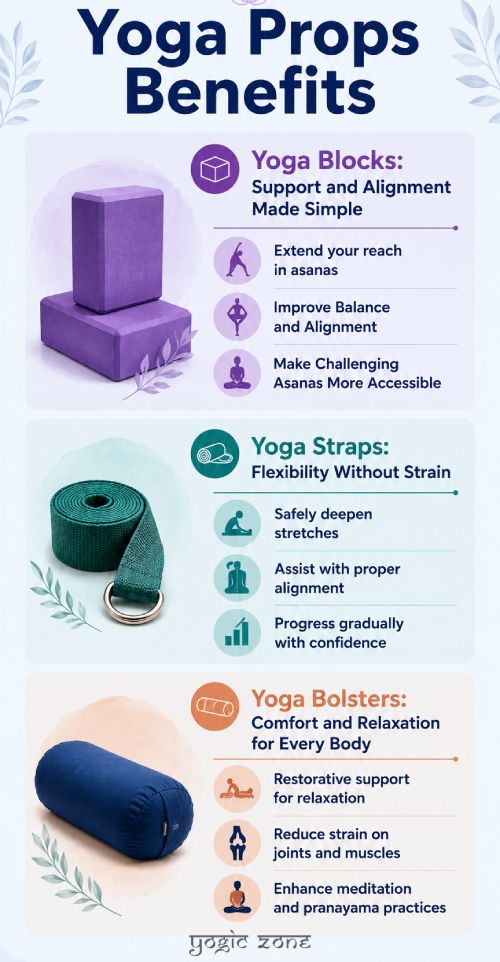
Yoga Blocks: Support and Alignment Made Simple
A yoga block makes many asanas more accessible by bringing the floor closer to you, helping you maintain proper alignment with less strain.
Extend Your Reach in Asanas
One of the biggest benefits of a yoga block is that it reduces the need to overstretch simply to reach the floor. This allows you to focus on proper alignment rather than how far you can bend.
For example, in Trikonasana (Triangle Pose), many students try to force their lower hand all the way to the floor. If flexibility is limited, the upper body often leans forward, placing unnecessary strain on the lower back and knees. A block reduces how far you need to bend, making the posture more comfortable and stable.
In my experience teaching beginners, most students are surprised by how much more stable Trikonasana feels once they stop chasing the floor and start using a block.
Improve Balance and Alignment
Yoga blocks provide an additional point of support, helping you feel more stable in standing and balancing postures. This allows you to focus on proper alignment and body awareness instead of worrying about losing your balance. We have a dedicated article on cork vs foam yoga blocks to help you select the right type.
For example, in Ardha Chandrasana (Half Moon Pose), placing a block beneath the lower hand creates a more stable foundation. Many beginners find that this extra support helps them maintain balance while keeping the chest open and the standing leg strong.
Safety tip: Many Indian homes have smooth marble, granite, or tiled flooring. Always place your blocks on a stable yoga mat and check that they sit firmly before putting weight on them. A shifting block can affect balance and increase the risk of slipping during standing and balancing asanas.
Make Challenging Asanas More Accessible
Yoga blocks help bridge the gap between your current ability and the full expression of a posture. By reducing the range of motion required, they allow you to practice challenging asanas with greater comfort and confidence.
For example, in Malasana (Garland Pose), many practitioners find it difficult to lower the hips comfortably toward the floor. Sitting on a block can reduce strain on the ankles and knees while allowing you to experience the benefits of the posture without discomfort.
Yoga Straps: Flexibility Without Strain
Yoga straps extend your reach, allowing you to stretch comfortably without forcing the body. They are particularly useful for practitioners looking to improve flexibility while maintaining proper alignment. Read about the 10 yoga strap benefits in detail.
Safely Deepen Stretches
A yoga strap allows you to work within your current level of flexibility while gradually increasing your range of motion. This helps prevent overstretching and encourages steady progress.
In Paschimottanasana (Seated Forward Bend), many beginners strain to reach their feet, causing their backs to round. Looping a strap around the soles of the feet allows you to maintain a more comfortable position while gradually deepening the stretch.
Many students initially use a strap because they cannot reach their feet. Over time, they often discover that the strap helps them maintain better posture even after flexibility improves.
Assist With Proper Alignment
A yoga strap can help you maintain proper alignment when limited flexibility makes it difficult to achieve the full position comfortably.
In Janu Sirsasana (Head-to-Knee Forward Bend), many practitioners tend to round their shoulders while reaching for the extended foot. Using a strap allows you to keep the spine more upright and focus on the quality of the stretch rather than simply reaching the foot.
Progress Gradually With Confidence
Yoga straps provide support while flexibility develops, making it easier to practice without frustration. This can be particularly helpful for students who are new to yoga or returning after a long break.
In Gomukhasana (Cow Face Pose), many students find it difficult to clasp their hands behind the back. Holding a strap between the hands bridges the gap comfortably and allows shoulder mobility to improve gradually over time.
Yoga Bolsters: Comfort and Relaxation for Every Body
A yoga bolster supports the body during passive postures, helping muscles relax more completely and comfortably. Read our blog on yoga bolster basics.
Restorative Support For Relaxation
The less effort your body spends supporting itself, the easier it becomes to relax. A bolster provides gentle support so you can remain comfortably in restorative postures for longer.
In Supta Baddha Konasana (Reclined Bound Angle Pose), placing a bolster beneath the spine creates gentle support through the upper body. Many students find it easier to relax and remain comfortably in the posture for longer.
In restorative classes, I often notice students relax more deeply once the body feels fully supported rather than trying to hold itself in position.
Reduce Strain on Joints and Muscles
Bolsters help distribute body weight more evenly, reducing unnecessary pressure on sensitive areas such as the knees, hips, and lower back.
In Balasana (Child’s Pose), placing a bolster between the thighs and upper body can make the posture significantly more comfortable, especially for practitioners with tight hips, sensitive knees, or limited mobility.
Enhance Meditation and Pranayama Practices
Sitting comfortably is often one of the biggest challenges in meditation and pranayama. A bolster can elevate the hips and support a more comfortable seated position.
In Sukhasana (Easy Pose), sitting on a bolster helps raise the hips above the knees, making it easier to maintain an upright posture during meditation and breathing practices.
In my classes, I often tell students that even a firm pillow or a folded quilt from home can work beautifully when a yoga bolster is not available.
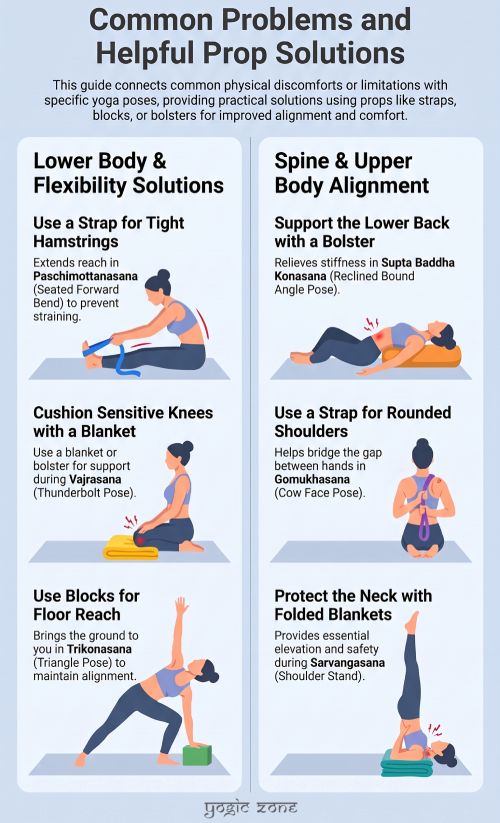
Common Problems and Helpful Prop Solutions
Many everyday challenges in yoga, such as tight muscles, sensitive joints, or difficulty reaching the floor, can be addressed with the right prop. I have summarised some of the most common concerns I see in class, along with helpful asanas and the props that can make your practice more comfortable and accessible.
| Common Concern | Suggested Asana | Helpful Prop |
|---|---|---|
| Tight hamstrings | Paschimottanasana (Seated Forward Bend) | Strap |
| Sensitive knees | Vajrasana (Thunderbolt Pose) | Blanket or bolster |
| Lower back stiffness | Supta Baddha Konasana | Bolster |
| Difficulty reaching the floor | Trikonasana (Triangle Pose) | Block |
| Rounded shoulders | Gomukhasana Arms (Cow Face Stretch) | Strap |
| Neck sensitivity during Shoulder Stand | Sarvangasana (Shoulder Stand) | Folded blankets |
Note: These are general suggestions. If you have any concerns or limitations, do not hesitate to discuss them with your yoga instructor.
Are Yoga Props Allowed in Traditional Yoga?
Yes. Yoga props are fully compatible with traditional yoga when they are used to support proper alignment and a steady, comfortable posture.
In fact, using support honours Sage Patanjali’s famous principle, Sthira Sukham Asanam, which teaches that an asana should be steady and comfortable.
The legendary guru B.K.S. Iyengar pioneered the thoughtful use of props to make the benefits of traditional Hatha yoga accessible to people of different ages, body types, and abilities.
His approach demonstrated that blocks, straps, blankets, and bolsters do not dilute authentic yoga. Instead, they help practitioners experience the essence of an asana with greater awareness and stability.
The Indian Home Workaround: Everyday Household Substitutes
A common question I hear is whether yoga props are worth the investment. I often tell my students that there is no need to buy everything right away. Traditional Indian households already contain many items that can serve as practical substitutes and make yoga more accessible at home.
The table below suggests practical household alternatives for some of the most commonly used yoga props.
| Yoga Prop | Household Alternative |
|---|---|
| Strap | Cotton dupatta or saree pallu |
| Block | Thick hardbound books or Bahi Khata ledger |
| Bolster | Firm pillow or rolled quilt |
| Blanket | Cotton dhurrie or folded bedsheet |
| Wall support | Plain wall in the room |
| Chair | Stable dining chair without wheels |
Caring for Your Yoga Props in Indian Weather
Proper care can help your yoga props remain clean, comfortable, and durable for years.
India’s heat, humidity, and monsoon season can affect yoga props differently depending on the material.
Cork blocks generally handle humidity better than foam blocks and are less likely to retain moisture during the monsoon months. Foam blocks should be allowed to dry completely before storage to prevent odours and deterioration.
If you use a natural rubber yoga mat, avoid leaving it in direct sunlight for extended periods. Excessive heat can cause the material to dry out and gradually lose its grip. Fabric-covered bolsters and cotton straps should be aired regularly, especially during humid weather, and removable covers should be washed according to the manufacturer’s instructions.
Household substitutes such as quilts, cushions, and blankets should also be fully dried before storage. A few minutes of regular care can help keep your props clean, comfortable, and durable for years.
A few minutes of care can significantly extend the life of your props and keep your practice space fresh and inviting.
Which Single Prop Should You Buy First?
For most beginners, a yoga block is the most versatile first prop because it can support standing, seated, balancing, and restorative practices. However, the best choice also depends on your needs:
| If You... | Start With |
|---|---|
| Find it difficult to reach the floor in standing or seated postures | Yoga Block |
| Have tight hamstrings or restricted shoulder mobility | Yoga Strap |
| Enjoy restorative yoga or longer relaxation practices | Yoga Bolster |
| Experience discomfort while sitting on the floor | Folded Blanket or Cushion |
The greatest yoga props benefits lie in making yoga more accessible, comfortable, and sustainable. Whether you are a complete beginner or a senior citizen, props can support safer movement and more mindful alignment.
The right yoga prop is not about making an asana easier. It is about maintaining proper alignment, reducing unnecessary strain, and building a safe yoga practice that allows you to progress at a pace that suits your body.
In my experience as a yoga teacher, there is no single “best” yoga prop. The ideal choice depends on your body, your goals, and the style of yoga you enjoy.
What matters most is using props as tools for awareness and support rather than measures of ability. When used thoughtfully, they can help make your yoga practice more comfortable, confident, and enjoyable for years to come.
Do you have any doubts or questions about this article?? I am Ayush Kothiyal, the author, and I would love to hear from you. Send me your question now!
Frequently Asked Questions About Yoga Props Benefits
If I can afford only one single prop to start, should it be a block, a strap, or a bolster?
You should definitely choose a yoga block. It is the most versatile budget prop available. A sturdy block can be used at three different heights to support your hands in standing poses, elevate your hips while sitting, or rest your back.
My foam blocks slip on my home’s marble floors during Trikonasana—how do I fix this safely?
You can anchor the block firmly against a wall or place it on a high-grip rubber yoga mat. Smooth marble offers zero friction for lightweight foam, so upgrading to a heavier cork block will also prevent slipping.
Can I use a standard plastic dining chair for chair yoga variations, or will it tip over?
No, it is better to avoid plastic chairs. They are lightweight, flex under pressure, and slide easily on tiled floors, making them highly unstable. Always use a heavy steel, iron, or solid wooden chair placed against a wall for safety.
Is it necessary to buy many yoga props to practice properly?
Not at all. A mat, one block, and a strap usually cover most needs, supporting balance, reach, and alignment in common asanas.
What if my lower back hurts when sitting cross-legged on the floor for pranayama?
No, it’s better to avoid straining. Simply place a firm yoga bolster or a folded cotton blanket under your hips. Elevating your pelvis instantly relieves the tight pull on your lower back, helping you sit straight and breathe easily.
Should I use a yoga strap if I cannot touch my toes, or will it delay my natural flexibility?
Yes, you must use a strap. It acts as an extension of your arms so you don’t hunch your spine to reach down. It actually accelerates deep, safe flexibility by keeping your chest open and your alignment anatomically perfect.
Should seniors or older adults always practice yoga with props?
Preferably yes. Props improve stability, comfort, and confidence, making practice safer and more accessible as balance and mobility change.
How do I use a yoga block to protect my neck during Sarvangasana (Shoulder Stand) if I have mild cervical issues?
No, you should never use a hard block under your neck here. A block creates a dangerous pivot point for your spine. Instead, stack two firm, folded cotton blankets under your shoulders so your neck can safely hang free from pressure.
Can yoga props prevent injuries?
Yes. Proper use of yoga props reduces pressure on joints, improves posture, and lowers the risk of common yoga-related injuries.