

PhD Scholar (Public Health) | Master of Public Health | Bachelor of Physiotherapy | PG Diploma in Yoga Therapy—focusing on adolescent wellness, ergonomics, and lifestyle interventions. Know more about Dr. Namrata Shekhawat (PT).
Yoga for office workers is not about pulling out a mat and doing full yoga sessions between meetings. It’s about reclaiming your energy through small, intentional movements and breath—right where you sit, in whatever you are wearing, without disturbing your work routine.
As a yoga teacher specialising in posture correction, flexibility, and workplace wellness, I work closely with office professionals experiencing ongoing fatigue and reduced focus. These symptoms often reflect nervous system overload rather than physical exertion. Yoga for office workers supports stress regulation and sustainable energy during the workday.
Why Is Your Desk Job Draining You?
Your body is not designed to sit still for long hours while the mind stays constantly active. Prolonged screen time leads to shallow breathing, reduced circulation, spinal compression, and elevated stress hormones.
Over time, this results in fatigue that sleep alone can’t fix—afternoons feel heavy, and even simple tasks start to feel overwhelming. Yoga for office workers addresses this at the root by creating small, restorative pauses within the workday.
Common Office Habits That Increase Fatigue (Even If You Exercise)
Many office workers wonder why they still feel exhausted despite working out or practicing yoga occasionally. The answer often lies in everyday desk habits that quietly drain energy throughout the workday.
One of the most common issues is unconscious breath-holding during stress. While concentrating, responding to emails, or attending meetings, many people stop breathing fully without realizing it. This shallow or paused breathing keeps the nervous system in a constant alert state, increasing mental fatigue and tension.
Another frequent mistake is over-stretching aggressively between meetings. Quick, forceful stretches—especially for the neck and shoulders—can overstimulate already tired muscles. Instead of relief, this can increase stiffness or discomfort later in the day.
Sitting continuously for three to four hours without micro-movement is another major contributor to fatigue.
Even with a daily workout, long uninterrupted sitting reduces circulation, compresses the spine, and dulls mental alertness. Small, regular movements matter more than one intense session.
Finally, using desk yoga only when pain becomes severe turns it into a reactive tool rather than a preventive one. Waiting until discomfort peaks makes it harder for the body to recover and reinforces the cycle of tension and fatigue.
Desk yoga works best as prevention, not damage control—small, regular pauses that stop stress and stiffness from accumulating in the first place.
Do you have any doubts or questions about this article?? I am Dr. Namrata Shekhawat (PT), the author, and I would love to hear from you. Send us your question now!
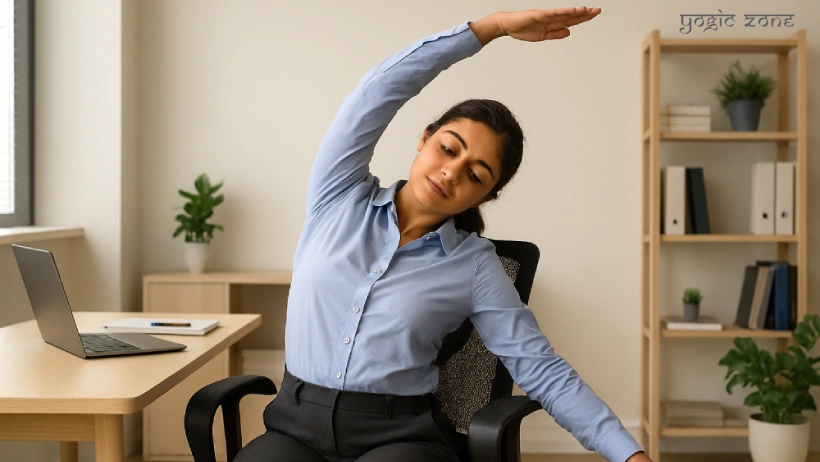
How Desk Yoga Actually Works
Desk yoga works by calming the nervous system, improving circulation, and releasing built-up tension through gentle movement and conscious breathing. Its effectiveness lies in simplicity—you don’t need a mat or long sessions.
Small, mindful movements loosen stiff joints, slow shallow breathing, and reset posture before strain builds up. Practiced consistently, even for five minutes, desk yoga improves oxygen flow to the brain, reduces physical tension, and creates brief mental pauses. Research on workplace yoga also shows reduced stress, better emotional balance, and improved focus with regular practice.
Simple Desk Yoga Asanas for Stress and Fatigue Relief
I have created a list of asanas that actually work in an office environment—no mat required, no changing clothes, no awkward explanations to curious colleagues.
| Asanas | Primary Benefit |
|---|---|
| Marjaryasana–Bitilasana (Seated Cat–Cow) | Improves spinal mobility after prolonged sitting |
| Parsva Urdhva Hastasana (Seated Side Stretch) | Expands rib cage and supports deeper breathing |
| Garudasana (Seated Eagle Arms) | Releases tension between shoulders and upper back |
| Paschimottanasana (Seated Forward Bend on Chair) | Calms the mind and eases lower-back stiffness |
| Tadasana (Standing Mountain at Desk) | Resets posture and improves body awareness |
| Uttanasana (Standing Forward Fold) | Improves circulation and reduces mental fatigue |
Note: The asanas mentioned here are recommended by our qualified and experienced authors for general awareness and inspiration. We do not provide step-by-step instructions, as each individual’s physical condition and needs are unique. We strongly recommend learning yoga under the guidance of a qualified instructor who can offer personalised support and ensure safe practice.
Your Weekly Desk Yoga Plan
Yoga for office workers becomes effective when it’s woven into your routine, not treated as an occasional emergency measure. This Monday-to-Friday routine gives you a gentle rhythm without overwhelming your schedule.
| Day | Focus | Suggested Practice |
|---|---|---|
| Monday | Grounding and settling | Marjaryasana–Bitilasana (Seated Cat–Cow) + slow breathing |
| Tuesday | Upper-body release | Parsva Urdhva Hastasana (Seated Side Stretch) + wrist movements |
| Wednesday | Posture reset | Tadasana (Standing Mountain at Desk) + posture check |
| Thursday | Shoulder tension release | Garudasana (Seated Eagle Arms) + gentle twist |
| Friday | Mental wind-down | Paschimottanasana (Seated Forward Bend on Chair) + longer exhales |
Pick one time slot each day, maybe right after your morning coffee settles, or just before lunch. Practicing for five to ten minutes is enough to rejuvenate you. Yoga in the workplace works best when it is short, consistent, and easy to repeat.
Pranayama and Breathing Practices That Support Desk Yoga
Pranayama, or conscious breathing, is the fastest way to calm the body during work hours. You don’t need complex techniques. Simple awareness of the breath is often enough to interrupt stress and mental overload. For readers unfamiliar with pranayama, this Pranayama for beginners resource explains foundational breathing practices that complement desk yoga well.
Here’s a simple example. Place one hand on your belly. Inhale slowly through the nose for four counts, letting the belly expand. Pause briefly. Exhale through the nose for six counts. Repeat this three times.
Just one or two minutes of conscious breathing can reduce restlessness and help the mind settle. For office workers, I commonly recommend:
- Belly breathing between meetings or during phone calls
- Bhramari (Bee Breath) when the mind feels overactive or restless
- Extended exhales whenever you notice tension building in the shoulders or jaw
Even ninety seconds of simple pranayama can interrupt the stress response and bring the body back toward balance.
When to Practice Desk Yoga During the Workday
Desk yoga works best when practiced before fatigue peaks.
Ideal times include:
- Mid-morning (around 11 AM) after you’ve been at your desk for a couple of hours
- Post-lunch (1-2 PM) (make sure not just after heaving meal – take 30-45 min break) to counter the afternoon energy dip
- Late afternoon (4-5 PM), when fatigue typically peaks
- Before logging off to release accumulated tension before you head home
Who Should Practice Yoga for Office Workers
Office yoga benefits anyone who spends long hours sitting, especially those experiencing fatigue, mental overload, or reduced focus, including:
- Corporate employees in traditional offices
- Remote workers whose kitchen table has become their workstation
- Freelancers and entrepreneurs working long, irregular hours
- Students preparing for competitive exams with extended study sessions
You don’t need to be flexible. You don’t need prior yoga experience. You just need to be willing to pause and move with intention.
Making Office Yoga a Sustainable Habit
Yoga works best when treated as daily maintenance, not an occasional fix. The professionals who see real results from office yoga practice regularly, even when they don’t “feel like it.”
Start with one dedicated time slot per day. Set a quiet phone reminder. Keep it short. On busy days, even two minutes of conscious breathing counts. Over weeks, you’ll notice you’re less reactive to stress, your energy is more stable, and physical discomfort doesn’t accumulate the way it used to.
Yoga for office workers isn’t about adding pressure or striving for perfection. It’s about maintenance—small, sustainable practices that keep you functional, focused, and relatively sane in demanding work environments.
Do you have any doubts or questions about this article?? I am Dr. Namrata Shekhawat (PT), the author, and I would love to hear from you. Send us your question now!
Frequently Asked Questions About Yoga for Office workers
Can yoga really reduce workplace stress during office hours?
Yes—desk yoga calms your nervous system, improves breathing patterns, and creates mental space, making stress feel more manageable throughout your workday.
How much time do I actually need for office yoga each day?
Five to ten minutes daily is sufficient—brief, regular practice beats long occasional sessions for reducing stress and preventing fatigue buildup in office workers.
Will desk yoga work if I am completely inflexible and new to yoga?
Absolutely—office yoga focuses on gentle awareness and movement, not flexibility, making it ideal for stiff bodies and complete beginners without any prior experience.
Can yoga help with constant tiredness and afternoon energy crashes?
Yes—yoga improves circulation and breathing efficiency, helping reduce mental fatigue and restore natural energy without relying on caffeine or other stimulants for office workers.
Do I need special clothes or a mat for yoga at work?
No—desk yoga works in regular office wear using your chair or desk for support, requiring no equipment, mat, or clothing change during work hours.
Is yoga better than simple stretching for office-related stress?
Yoga combines movement with breath awareness and mental focus, making it more comprehensive than stretching alone for managing workplace stress, fatigue, and tension effectively.
Will office yoga actually improve my focus and work productivity?
Yes—by calming mental chatter and increasing oxygen flow to your brain, yoga enhances concentration, decision-making clarity, and overall work efficiency for office workers.
How often should I practice yoga at work to see real benefits?
Daily practice delivers best results, but even three to four weekly sessions significantly reduce work stress and fatigue over time for most office workers.