

MA Yogic Science | RYT 200 (Yoga Alliance USA) | 6+ yrs experience | Prenatal & Postnatal Yoga | Aerial Yoga | Women’s Wellness & Therapeutic Yoga Specialist | Know more about Lily Chetia.
Trying to conceive in India often comes with silent pressure. Clinic visits, well-meaning relatives, prayers and fasts, and the constant question of “any good news?” can quietly raise stress levels.
Yoga for fertility finds its place within this ongoing emotional load, not as a medical solution, but as a steady practice that supports stress regulation and the body’s natural hormonal rhythm.
As a certified Yoga Instructor (RYT-200, Yoga Alliance USA) specialising in Women’s Wellness Yoga, I have guided many women in reconnecting with their bodies during this emotionally sensitive phase.
The yoga asanas for fertility shared here can be safely adapted for home practice, whether you are trying to conceive naturally or alongside medical treatments.
How Yoga for Fertility Supports the Body and Mind
Gentle yoga supports pelvic circulation and relaxation, helping lower stress hormones like cortisol that can disrupt natural cycle rhythms and interfere with ovulation. This holistic fertility approach supports both physical ease and emotional balance.
Research published in the International Journal of Reproduction, Contraception, Obstetrics and Gynecology discusses yoga as a complementary wellness practice during fertility care, particularly for stress reduction and emotional wellbeing.
Gentle asanas, slow breathing, and restorative yoga, where supported poses are held longer using props, help calm the nervous system. Unlike active styles, this deep relaxation supports hormonal balance. If you are new to yoga, our blog on Pranayama for beginners may be helpful.
These gentle practices also improve circulation to the reproductive organs, supporting oxygen and nutrient flow to the ovaries and uterus. This is why yoga for fertility is often used alongside IVF or IUI, not as treatment but as nervous-system support. Many women also practise yoga for pregnancy preparation, building strength and body awareness for the months ahead.
Key Benefits of Yoga for Fertility for Physical and Emotional Wellbeing
| Physical Benefits | Emotional Benefits |
|---|---|
| Improved pelvic blood circulation | Reduced trying to conceive anxiety |
| Hormonal balance support | Better sleep quality |
| Strengthened pelvic floor | Enhanced body awareness |
| Regulated menstrual cycles (especially with PCOS) | Emotional processing space |
7 Gentle Yoga Asanas for Fertility Support
In my classes, these seven asanas create the most noticeable change in women’s stress levels and overall well-being. Whether you are exploring yoga to get pregnant naturally or alongside medical treatment, these asanas focus on pelvic relaxation, circulation, and stress reduction rather than intensity.
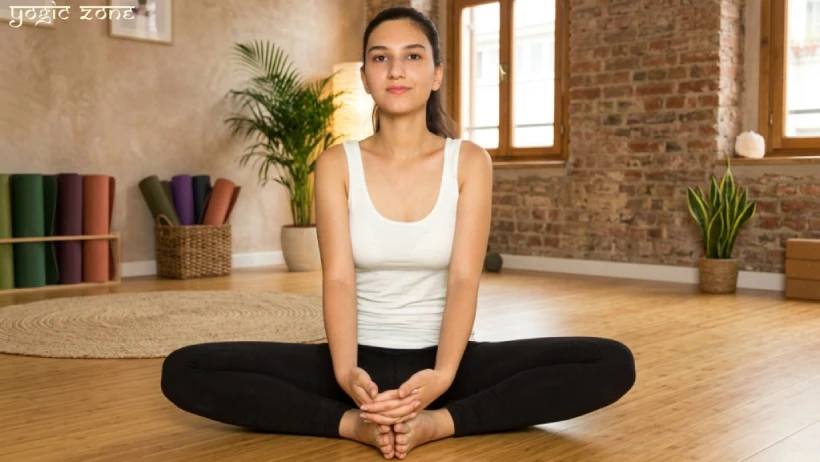
1. Baddha Konasana (Butterfly Pose)
Why it helps: Encourages blood flow to the pelvic region and gently releases inner thigh tension.
Beginner Tip: Sit on a folded blanket or pillow to keep the spine upright.
Safety Note: Do not force the knees up and down. You should feel a comfortable stretch in the hips, not pain or discomfort.
2. Viparita Karani (Legs Up the Wall)
Why it helps: It calms the body and helps blood flow smoothly from the pelvic area..
Beginner Tip: Place a pillow under the hips instead of a bolster.
Safety Note: Skip during menstruation or immediately after embryo transfer unless advised otherwise.
3. Setu Bandha Sarvangasana (Supported Bridge Pose)
Why it helps: Gently stimulates the pelvic area while expanding the chest and reducing anxiety.
Beginner Tip: Place a firm cushion under the lower back, at the base of the spine.
Safety Note: Avoid Setu Bandhasana holds during the luteal phase.
4. Balasana (Child’s Pose)
Why it helps: Encourages deep rest and reduces cortisol levels.
Beginner Tip: Place a pillow between thighs and chest for comfort.
Safety Note: If knees are sensitive, widen the legs or add more padding.
5. Supta Baddha Konasana (Reclining Butterfly)
Why it helps: Deeply restorative and commonly used to ease conception specific anxiety and stress while trying to conceive.
Beginner Tip: Support knees with cushions or rolled towels.
Safety Note: Ideal during the two-week wait.
6. Malasana (Yogic Squat)
Why it helps: Encourages pelvic floor awareness and improves hip mobility.
Beginner Tip: Sit on a low stool or folded blanket.
Safety Note: Avoid holding long during the luteal phase.
Marjaryasana–Bitilasana (Cat–Cow)
Why it helps: Improves spinal circulation and allows the pelvis to move in sync with the breath.
Beginner Tip: Keep movements slow and within comfort.
Safety Note: Avoid pushing the movement too far if your lower back feels sensitive.
Note: The asanas mentioned here are recommended by our qualified and experienced authors for general awareness and inspiration. We do not provide step-by-step instructions, as each individual’s physical condition and needs are unique. We strongly recommend learning yoga under the guidance of a qualified instructor who can offer personalised support and ensure safe practice.
Pranayama for Fertility: Gentle Breathing to Reduce Stress
Gentle pranayama supports fertility by calming the nervous system and reducing stress-related hormonal disruption.
I always teach pranayama in my fertility classes. These fertility breathing techniques balance hormones and calm anxiety while supporting your body’s natural rhythms.
- Nadi Shodhana pranayama technique for hormonal balance
- Bhramari pranayama technique for anxiety reduction
Practice for 5–10 minutes daily, ideally after your asana practice.
Safety Note: Avoid Kapalbhati during the luteal phase or two-week wait as forceful exhalation increases abdominal pressure.
Do you have any doubts or questions about this article?? I am Lily Chetia, the author, and I would love to hear from you. Send us your question now!
Positive Affirmations for Fertility: Supporting a Calm and Trusting Mindset
Alongside asana and pranayama, gentle positive affirmations can support emotional wellbeing during the trying to conceive phase.
Repeating a simple, reassuring thought helps shift the mind away from anxiety and towards trust in the body’s natural process.
In my classes, I often encourage women to silently repeat an affirmation during restorative poses or after pranayama practice. A simple example is: “My body is ready and capable of nurturing a healthy baby.”
You can repeat this for a few minutes while resting in poses like Supta Baddha Konasana or before sleep. Over time, this small practice can create a sense of calm, acceptance, and connection with your body.
When to Practise Yoga for Fertility Across Your Menstrual Cycle
Your yoga practice should change across the menstrual cycle, especially after ovulation, as cycle-specific practice is key for safety and effectiveness. This fertility-focused yoga approach ensures you are supporting your body appropriately throughout each phase.
Follicular Phase—Day 1–14
Energise with all seven asanas. This phase supports dynamic movement—focus on Malasana (Yogic Squat) and Marjaryasana–Bitilasana (Cat-Cow) for pelvic activation and spinal flow.
Ovulation – Around Day 14
Maintain gentle practice across all poses. Prioritise Setu Bandha Sarvangasana (Supported Bridge Pose) and Viparita Karani (Legs Up the Wall) to enhance circulation during your fertile window without overstimulation.
Luteal Phase/Two-Week Wait – Day 15–28
Choose restorative asanas only— Viparita Karani, Supta Baddha Konasana, Setu Bandha Sarvangasana, and Balasana. Skip Malasana and limit Marjaryasana–Bitilasana to very slow, supported versions.
Menstruation
Keep the practice gentle with Balasana, Supta Baddha Konasana, and gentle Marjaryasana–Bitilasana (seated version). Avoid inversions like Viparita Karani and Setu Bandha Sarvangasana until bleeding stops.
The Yoga–Aahar Connection: Simple Diet Support During Fertility
A Sattvic diet emphasises pure, nourishing foods that calm the mind and support the body’s natural rhythms, which aligns perfectly with the goals of fertility yoga.
In India, yoga and diet are traditionally viewed as complementary practices. I have observed that women who follow Sattvic dietary principles, focusing on fresh, seasonal, easy-to-digest foods, alongside their yoga practice report feeling more balanced overall.
If you are interested in learning more about yogic dietary principles, including Sattvic eating, I recommend reading this detailed guide: Yogic Diet Simplified: Eat To Transform Your Mind, Body, and Life.
Yoga for IVF and IUI Support: What to Keep in Mind
During IVF or IUI, yoga should shift from gentle movement to complete rest around key medical stages.
Gentle yoga is usually continued during stimulation, paused around transfer, and resumed as restorative. Many women find that gentle yoga provides essential emotional support throughout their trying-to-conceive journey, especially during medical interventions.
My advice to women undergoing IVF and IUI is:
- During injections: gentle stretches and breathwork are usually fine.
- Around embryo transfer: stick to complete rest or only breathing.
- After IUI: restorative poses only, no inversions or twists
- Always coordinate between your doctor and yoga teacher.
Practising Yoga for Fertility During Puja and Vrat
A question I am often asked: “Should I practice yoga on fasting days during Puja or Vrat?” This is an important consideration in our Indian households where religious fasting is common.
On full fasting days (nirjala vrat), I recommend skipping physical asanas entirely and focusing only on gentle pranayama and meditation.
On partial fasting days where you consume fruits or light foods, you can practice restorative poses like Viparita Karani or Supta Baddha Konasana, but avoid active poses. Listen to your body, stop and rest if you feel weak or dizzy.
Practical Guidance for a Safe Fertility Yoga Practice
Fertility yoga works best when it is gentle, consistent, and adapted to your cycle and energy levels.
- Work with a qualified instructor: Fertility yoga requires understanding of cycle phases, proper prop usage, and individual modifications. Look for teachers who have training in women’s health.
- Embrace restorative practice: Many women expect active flows, but the most effective fertility yoga focuses on restorative conception support through deep relaxation rather than intensity. Use props generously, such as bolsters, blocks, blankets, and eye pillows. If you are new to props, you may find the article on Yoga props benefits helpful.
- Use what you have: Don’t wait for expensive equipment. A pillow works as a bolster. A dupatta becomes a yoga strap. Thick books replace yoga blocks.
- Start small: Practice 15–20 minutes daily rather than hour-long sessions. Women who practice consistently for shorter periods see more benefit than those who practice intensely but irregularly.
- Avoid common mistakes: Pushing too hard (fertility yoga should feel gentle), holding your breath, practicing advanced poses without guidance, and comparing your flexibility to others.
What Yoga for Fertility Cannot Do
Yoga is not a fertility treatment. It cannot fix blocked fallopian tubes or severe endometriosis. While improved pelvic circulation may support uterine lining health, yoga alone cannot treat thin endometrium, this requires medical assistance.
Yoga for fertility is not about fixing the body or forcing outcomes. It is about creating space in the nervous system, the body, and the mind during a deeply sensitive phase of life.
In my experience, women who approach this practice with patience, gentleness, and consistency often feel more grounded and supported through their fertility journey, regardless of the path they are on. Use props generously, listen to your body, and allow the practice to meet you where you are.
Always consult your doctor and a qualified yoga teacher before beginning or modifying your practice.
Do you have any doubts or questions about this article?? I am Lily Chetia, the author, and I would love to hear from you. Send us your question now!
Frequently Asked Questions About Yoga for Fertility
Does yoga for fertility really help to get pregnant naturally?
Yes. Yoga lowers cortisol, which often interferes with ovulation. By reducing stress and increasing blood flow to reproductive organs, it creates a more receptive internal environment for natural conception.
How many times a week should I practice yoga for fertility?
Aim for 3 to 5 sessions per week. Consistent, gentle 20-minute practices are more effective for hormonal regulation and stress management than one long, intense workout once a week.
Which specific yoga asanas are most effective for egg quality?
Konasana (Butterfly) and Malasana (Yogic Squat) are highly effective. They boost blood flow to the pelvic region and ovaries, while Setu Bandha Sarvangasana (Supported Bridge Pose) helps balance the endocrine system for better egg health.
Is it safe to practice fertility yoga during my period?
Yes, but focus on restorative poses like Supta Baddha Konasana (Reclining Butterfly) and Balasana (Child’s Pose). These soothe the nervous system and relieve cramps without putting strain on the body.
Can I do these poses after ovulation or during the “Two Week Wait”?
Yes, but keep it very gentle. Avoid deep twists or intense abdominal pressure that could interfere with implantation. Focus on relaxation to keep the body calm during this critical window.
Should I avoid deep twists or inversions during an IVF cycle?
Yes. During IVF stimulation, ovaries are often enlarged and sensitive. Avoid deep twists or inversions to prevent discomfort or injury. Stick to light stretching and calming pranayama.
Can these gentle asanas help regulate hormones for PCOS?
Absolutely. Yoga improves insulin sensitivity and reduces the stress response, which is vital for balancing hormones and encouraging regular ovulation in women dealing with PCOS or irregular cycles.
Can I practice these yoga poses at home as a complete beginner?
Yes, but focus on restorative poses like Supta Baddha Konasana (Reclining Butterfly) and Balasana (Child’s Pose). These soothe the nervous system and relieve cramps without putting strain on the body.
Is “Legs Up the Wall” effective immediately after intercourse?
While not a medical guarantee, Viparita Karani promotes deep relaxation and uses gravity to keep sperm closer to the cervix. It is a safe, widely recommended post-intercourse practice for 10–15 minutes.
How often should I change my routine based on my cycle?
Sync your practice with your phases: be more active in the follicular phase, open the hips during ovulation, and switch to purely restorative, grounding poses during the luteal phase and menstruation.