
Certified Yoga Protocol Instructor (YCB) | Certified Yoga Therapist (YCB & IYO) | Certified Anatomy & Physiology Instructor (IYO) | Certificate in Naturopathy & Yogic Sciences (CNYS) | Hatha Yoga | Ashtanga Yoga | Therapeutic Yoga Practitioner. Know more about Vikrant Prabhu Desai.
Ashtanga yoga for beginners is often misunderstood as intense or only for advanced practitioners. In reality, when approached correctly, it is one of the most structured and progressive systems for improving flexibility, strength, and breath awareness, especially if you start with a stiff body. Practice my 6-day Ashtanga yoga routine to make your body flexible in 4 to 6 weeks.
This traditional yoga style follows a fixed sequence that allows the body to open gradually over time. For beginners, following the same sequence actually helps. You know what is coming next, the body adjusts slowly, and practice feels manageable instead of stressful.
As a certified and experienced yoga trainer who has introduced many beginners to Ashtanga yoga, I can confidently state that stiffness is not a limitation; it’s simply the starting point. With consistency, mindful breath, and realistic pacing, flexibility can be developed naturally without forcing the body. If you still feel that you need to start at a slower pace, read this blog on Hatha Yoga for beginners.
Why Ashtanga Yoga Works Well for Beginners
Ashtanga yoga for beginners builds flexibility through repetition, breath control, and intelligent sequencing rather than random stretching. The practice combines:
- Steady movement with breath (vinyasa)
- Progressive opening of hips, hamstrings (a group of muscles that run along the back of the thigh, extending from the hip bone to just below the knee joint), shoulders, and spine
- Consistency through a fixed sequence
This structure helps beginners build trust in the practice and their own body.
What Beginners Should Know Before Starting Ashtanga Yoga
Beginners benefit most when Ashtanga is practiced with patience, modified expectations, and guidance from trained teachers. My advice to beginners:
- You don’t need flexibility to start.
- Stiffness improves with repetition, not force.
- Breath matters more than depth of the asana.
- Rest days are part of progress.
6-Day Ashtanga Yoga Routine for Beginners
I highly recommend this 6-day routine, as it introduces Ashtanga yoga gradually, allowing flexibility to improve without strain.
| Day | Focus Area | Intention |
|---|---|---|
| Day 1 | Breath + Gentle Flow | Build familiarity with vinyasa rhythm. |
| Day 2 | Hamstrings + Hips | Reduce lower-body stiffness. |
| Day 3 | Spine and Shoulders | Improve mobility and posture. |
| Day 4 | Standing Strength | Build stability and balance. |
| Day 5 | Forward Bends | Calm the nervous system, deepen flexibility |
| Day 6 | Light Backbends and Rest | Expands chest and restores energy |
Sunday or one rest day per week is strongly recommended. Here are some more tips for Ashtanga yoga beginners.
Day 1: Breath Awareness and Gentle Movement
Breath-led movement helps beginners settle into Ashtanga without physical overwhelm. Recommended asanas:
- Surya Namaskara A (Sun Salutation A) – warms joints and synchronises breath
- Samastithi (Equal Standing) – builds posture awareness
- Padangusthasana (Big Toe Hold Pose) – gently stretches hamstrings
The benefits of the above asanas include improved coordination, circulation, and confidence.
Do you have any doubts or questions about this article?? I am Vikrant Prabhu Desai, the author, and I would love to hear from you. Send us your question now!
Day 2: Hamstrings and Hip Opening
Tight hips and hamstrings are common beginner challenges that Ashtanga addresses systematically. Recommended asanas:
- Utthita Trikonasana (Extended Triangle Pose) – improves hip flexibility
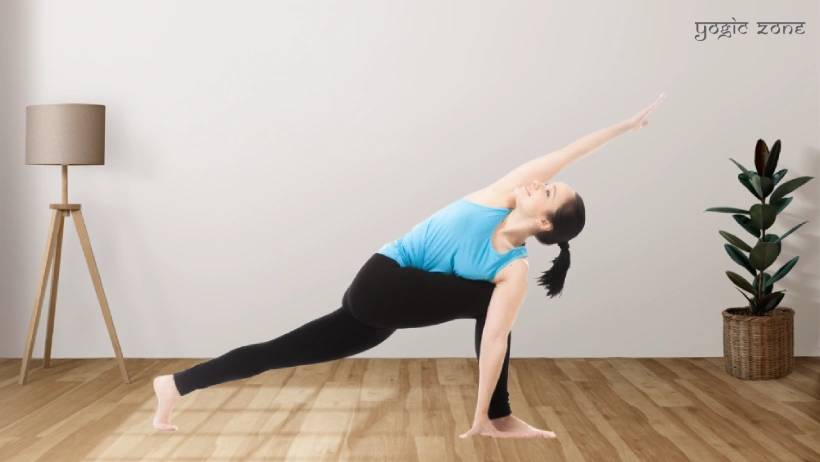
- Utthita Parsvakonasana (Extended Side Angle Pose) – opens groin and thighs
- Prasarita Padottanasana (Wide-Leg Forward Bend Pose) – releases lower-body stiffness
The benefits of the above asanas are that forward bends are easier and lower-back tension is reduced.
Day 3: Spine and Shoulder Mobility
Spinal movement in Ashtanga improves flexibility while supporting long-term joint health. Recommended asanas:
- Ardha Baddha Padmottanasana (Half-Bound Lotus Forward Bend Pose) – improves shoulder rotation and hip mobility while encouraging spinal length.
- Marjariasana–Bitilasana (Cat & Cow Pose) – gently mobilises the spine and relieves stiffness in the back and neck.
- Urdhva Mukha Svanasana (Upward-Facing Dog Pose) – opens the chest and shoulders, supporting better posture and breathing.
The benefits of the above asanas are that they lead to better posture, shoulder freedom, and breathing capacity.
Day 4: Standing Strength and Balance
Strength supports flexibility, especially for beginners transitioning from stiffness. Recommended asanas:
- Virabhadrasana A & B (Warrior Pose) – builds leg and hip strength
- Utthita Hasta Padangusthasana (Extended Hand-to-Toe Pose) – improves balance
- Utkatasana (Chair Pose) – strengthens thighs and core
The benefits of the above asanas are better stability, endurance, and safer progression into deeper asanas.
Day 5: Forward Bends and Nervous System Calm
Forward-folding asanas help beginners release tension and mental restlessness. Recommended asanas:
• Paschimottanasana (Seated Forward Bend asana) – gently stretches the spine and hamstrings while encouraging mental calm.
• Janu Sirsasana (Head-to-Knee Asana) – improves hip and hamstring flexibility with a soothing effect on the mind.
The benefits of the above asanas include improved digestion, calming the mind, and increased hamstring flexibility.
Day 6: Light Backbends and Restoration
Gentle backbends counter stiffness caused by sitting and poor posture. Recommended asanas:
- Bhujangasana (Cobra Pose) – opens chest and lungs
- Salabhasana (Locust Pose) – strengthens the back body
- Setu Bandhasana (Bridge Pose) – supports spinal flexibility
The benefits of the above asanas include better breathing, posture correction, and emotional upliftment.
Note: The asanas mentioned here are recommended by our qualified and experienced authors for general awareness and inspiration. We do not provide step-by-step instructions, as each individual’s physical condition and needs are unique. We strongly recommend learning yoga under the guidance of a qualified instructor who can offer personalised support and ensure safe practice.
How Long Before Beginners See Flexibility Results?
Most beginners notice improved flexibility, breathing ease, and reduced stiffness within 3–4 weeks of consistent practice.
Progress depends on:
- Regularity/Consistency
- Quality of breath / Slow & deep breathing
- Respecting rest days
Ashtanga Yoga for beginners is not about forcing flexibility or achieving perfect shapes. It is about showing up regularly, breathing steadily, and allowing the body to open at its own pace. When practiced with patience and guidance, even a stiff body begins to feel lighter, stronger, and more flexible over time. This 6-day routine designed by me is meant to support that journey in a safe, realistic, and sustainable way.
Do you have any doubts or questions about this article?? I am Vikrant Prabhu Desai, the author, and I would love to hear from you. Send us your question now!
Frequently Asked questions About Ashtanga Yoga For Beginners
Is Ashtanga Yoga suitable for beginners with stiff bodies?
Yes. Ashtanga Yoga for beginners is designed to gradually reduce stiffness through repetition, breath control, and progressive sequencing rather than extreme flexibility demands.
How many days a week should beginners practice Ashtanga Yoga?
Beginners can practice Ashtanga Yoga 4–6 days a week with at least one rest day to allow muscles and joints to recover safely.
Do I need to be flexible before starting Ashtanga Yoga?
No. Flexibility is a result of practice, not a requirement. Ashtanga yoga for beginners helps flexibility develop naturally over time.
Is Ashtanga Yoga too intense for beginners?
When modified appropriately and practiced mindfully, Ashtanga Yoga is safe for beginners and builds strength and flexibility together.
How long should a beginner Ashtanga yoga session last?
Beginners can start with 30–45 minutes and gradually increase duration as stamina, strength, and breath control improve.
Can Ashtanga Yoga help with back stiffness and posture?
Yes. The structured sequence improves spinal mobility, strengthens postural muscles, and reduces stiffness caused by prolonged sitting.
Should beginners practice Ashtanga Yoga at home or in a class?
Beginners benefit most from learning in guided classes initially to understand alignment, breath, and safe progression.
When is the best time to practice Ashtanga Yoga for beginners?
Morning practice is traditional and energising, but beginners can practice anytime they feel consistent, focused, and relaxed.