
Yoga Therapist | RYT-500 Educator | MSc Yoga | Hatha & Vinyasa | Online Yoga Tutor | Therapeutic Practices & Meditation. Know more about Soumi Saha.
As a yoga trainer guiding students of all ages and levels, comparisons about Hatha yoga vs. Vinyasa come up in almost every class. When two styles share the same yogic roots but feel so different in pace, intensity, and focus, it is natural to wonder which one truly suits your practice.
In this guide, I will break down the difference between Hatha yoga and Vinyasa yoga, how each style affects your mind and body, and how to choose the right approach based on your goals.
If you are new to yoga, the choice between Hatha yoga vs. Vinyasa yoga can determine how consistently you practice, how safe you feel, and how well you progress.
What Is Hatha Yoga?
Hatha yoga is a slower, steadier form of practice that focuses on posture, breath awareness, and alignment. Traditionally, “Hatha” refers to any physical practice of yoga, but in modern terms it describes a calm, beginner-friendly class where postures are held for longer.
Many of my students who want to build awareness, correct posture, or recover from fatigue start with Hatha because it gives them time to understand the foundations of asana. If you are just starting your yoga journey, this guide on Hatha yoga for beginners covers the essential foundations.
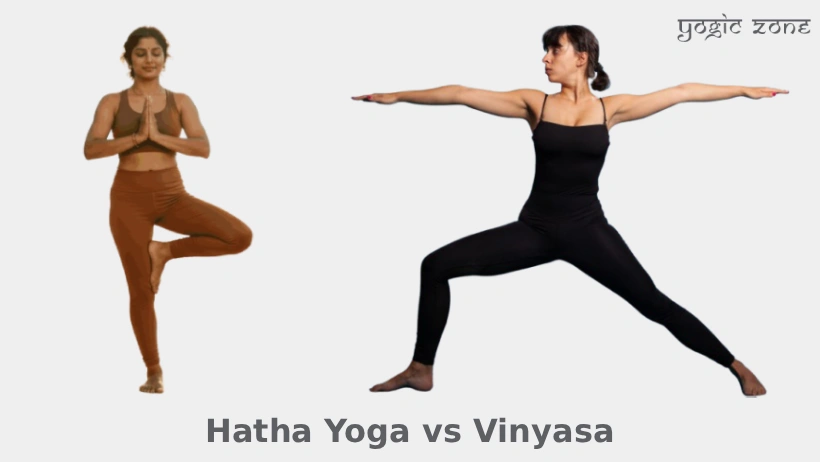
Common Hatha Asanas:
- Tadasana (Mountain Pose) – great for posture correction
- Bhujangasana (Cobra Pose) – Expands the chest and improves spinal mobility
- Trikonasana (Triangle Pose) – builds stability and enhances breath expansion
- Vrikshasana (Tree Pose) – improves balance and concentration
Do you have any doubts or questions about this article?? I am Soumi Saha, the author, and I would love to hear from you. Send us your question now!
What Is Vinyasa Yoga?
Vinyasa yoga is a dynamic, flowing style where movement follows breath. Think of it as a rhythmic sequence—each inhale and exhale guides you into the next posture. The practice can be energising, creative, and athletic depending on the teacher.
Students who enjoy movement-based fitness or want a stronger cardiovascular experience often prefer Vinyasa. It’s also a great option if you struggle to stay still because the continuous flow keeps your mind engaged. Many older adults enjoy the smooth, breath-led flow of Vinyasa. You can learn more in our article on the benefits of Vinyasa yoga for seniors.
Common Vinyasa Asanas:
- Adho Mukha Svanasana (Downward-Facing Dog) – strengthens the arms and lengthens the spine
- Utkatasana (Chair Pose) – builds lower-body strength and stamina
- Chaturanga Dandasana (Four-Limbed Staff Pose) – strengthens shoulders and core
- Virabhadrasana II (Warrior II) – enhances endurance and hip mobility
Hatha Yoga vs Vinyasa: Key Differences
Here’s a simple table to help you compare the differences between Hatha and Vinyasa Yoga.
| Feature | Hatha Yoga | Vinyasa Yoga |
|---|---|---|
| Pace | Slow, steady | Fast, rhythmic |
| Breath | Breath awareness and holding patterns | Breath-to-movement flow |
| Intensity | Moderate | Moderate to high |
| Focus | Alignment, posture, grounding | Strength, stamina, continuous movement |
| Suitable For | Beginners, injury recovery, calm practice | Active individuals, those who enjoy flow |
| Feel After Class | Relaxed, centred | Energised, refreshed |
Hatha Yoga vs Vinyasa Yoga – How to Decide What’s Right for You
1. If you’re a beginner, start with Hatha Yoga
Most newcomers find Hatha easier to understand because each posture is broken down step by step. It builds the confidence needed before exploring fast-paced flows.
2. Choose Vinyasa if you want a workout-like experience
If your intention is to sweat, build endurance, and feel physically challenged, Vinyasa stimulates strength and cardiovascular benefits more quickly.
3. Select Hatha if you want stress relief
The slower pace encourages nervous system regulation, making it ideal for those who feel overwhelmed, anxious, or easily fatigued.
4. Pick Vinyasa if you enjoy movement and creativity
No two Vinyasa classes are identical. Teachers sequence postures differently, so the practice feels dynamic and mentally stimulating.
5. If flexibility is your goal, both work in different ways
- Hatha helps you hold postures long enough for deep muscular release.
- Vinyasa warms the body quickly, making it easier to explore range of motion.
6. If you prefer tradition and mindfulness, Hatha resonates more
Hatha emphasises foundational aspects of yoga—posture, breath, and focus—making it ideal for spiritual or meditative goals.
Can You Practice Hatha Yoga and Vinyasa Yoga Both?
Absolutely. Many of my students blend the two depending on mood and energy levels. For example:
- Hatha on days you want grounding, healing, or clarity
- Vinyasa on days you want flow, strength, and momentum
Balancing both can give you the best of yoga—strength, flexibility, mindfulness, and resilience.
Hatha vs Vinyasa – What I Recommend
When choosing between Hatha Yoga vs Vinyasa, I recommend starting with Hatha for 3–4 weeks to build a strong foundation. Add a weekly Vinyasa class once you feel steady. This balanced approach helps your body adapt gradually and makes it easier to find the style that genuinely supports your long-term practice.
Do you have any doubts or questions about this article?? I am Soumi Saha, the author, and I would love to hear from you. Send us your question now!
Frequently Asked Questions About Hatha Yoga vs Vinyasa
What is the main difference between Hatha and Vinyasa yoga?
Hatha is slow and alignment-based, while Vinyasa is faster and breath-led. One builds steadiness; the other builds flow, strength, and endurance.
Is Hatha yoga better for beginners than Vinyasa?
Yes. Hatha’s slower pace helps beginners learn alignment safely before exploring the faster transitions used in Vinyasa classes.
Which style burns more calories: Hatha or Vinyasa?
Vinyasa generally burns more calories because the continuous movement and quicker transitions create higher cardiovascular demand.
Can I do Hatha yoga if I’m not flexible?
Absolutely. Hatha is ideal for inflexible beginners because the slower pace allows gentle stretching and awareness without pressure.
Is Vinyasa yoga suitable for weight loss?
Yes. Vinyasa supports weight loss by combining strength work, active transitions, and breath-led flow that increases overall energy burn.
Which is better for stress relief: Hatha or Vinyasa?
Hatha tends to calm the nervous system more deeply, making it ideal for relaxation, grounding, and reducing mental fatigue or tension.
Can I practice both Hatha and Vinyasa in the same week?
Yes. Mixing both styles builds flexibility, strength, and balance. Many students practice Hatha for calm days and Vinyasa for active days.
Is Vinyasa yoga too fast for beginners?
Some beginners may find it fast initially, but with basic foundation from Hatha and mindful breathwork, Vinyasa becomes easier to follow.