
RYT 500 Yoga Teacher | Advanced Teacher’s Training (900 hours) | Certified Tarot Healer and Pranic Healing Practitioner | Certified Life Coach. Know more about Karishma Krishnani.
Finding the right yoga pants isn’t just a matter of fashion; it’s about feeling physically supported, free to move, and emotionally at ease during your practice. The last thing you want is an uncomfortable waistband distracting your focus or a rigid fabric that restricts your deep breathing.
With so many types of yoga pants, yoga leggings, and yoga bottoms available in different cuts, styles, and fabrics, choosing the right pair can be really confusing. Over the years, teaching yoga to practitioners of different ages and body types has taught me what works best in real-life practice.
In this guide, I will help you select the perfect pair, with practical recommendations for Indian women, beginners, and seniors who need modest coverage, good breathability, and lasting comfort in a warmer climate. Whether you are searching for comfortable yoga pants for women, the best yoga pants for beginners, or modest yoga wear for seniors, this guide covers everything.
Which Yoga Pants Are Best for You?
To make your choice easier, here are my top recommendations based on different practice styles and needs.
- Best for Dynamic Yoga (Vinyasa/Power): Full-length, high-waisted nylon or spandex leggings.
- Best for Hot/Humid Climates: Capri-style yoga pants.
- Best for Seniors & Gentle Practice: Flared/bootcut pants or soft cotton-blend joggers.
What Makes a Good Pair of Yoga Pants?
A good pair of yoga pants should support your practice, allowing you to move freely and stay comfortable from the first stretch to Savasana. Here are the key features to look for:
- Move with your body: Look for four-way stretch that allows the fabric to stretch in all directions without restricting movement, helping you bend, twist, and transition comfortably through asanas like Virabhadrasana (Warrior Pose).
- Stay in place during practice: A secure waistband should not roll down during forward bends or ride up during deep stretches.
- Provide coverage without clinging: Especially important for Indian women and seniors, the fabric should provide good coverage and should not become see-through during bends and stretches.
Look for squat-proof leggings or non-see-through yoga pants with a denser knit for reliable, opaque coverage. - Feel breathable in warm and humid weather: Choose fabrics that allow better airflow and help manage sweat, so you stay cool and comfortable during practice.
Do you have any doubts or questions about this article?? I am Karishma Krishnani, the author, and I would love to hear from you. Send us your question now!
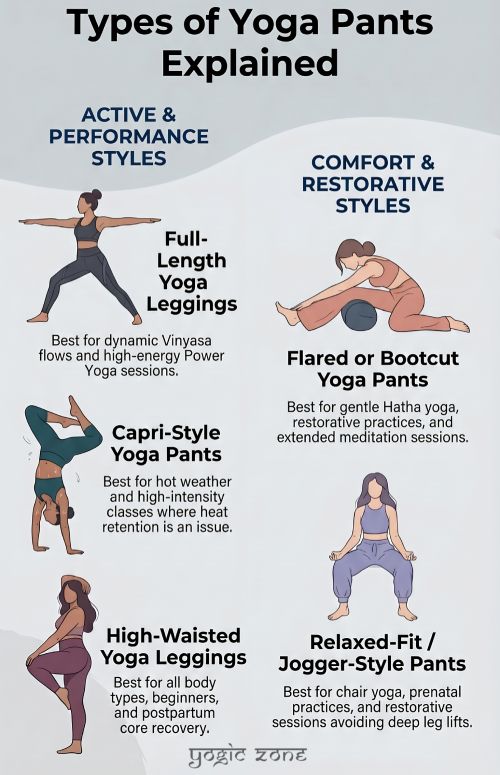
5 Types of Yoga Pants Explained
Understanding the different cuts and styles is the first step toward finding your perfect pair. Each style is uniquely suited to a specific practice, body type, or climate preference.
Knowing the differences helps you choose the best yoga pants for your body type and practice level, whether you are a complete beginner or a seasoned practitioner.
At times, beginners do get confused between yoga pants and regular leggings; you should read my article on yoga pants vs. leggings if you are not aware of the differences
1. Full-Length Yoga Leggings
- The Fit: Snug and form-fitting from the waist all the way down to the ankle.
- Best For: Dynamic Vinyasa flows and high-energy Power Yoga sessions.
- Expert Tip: Always prioritise high-waist styles. They provide excellent core support and ensure maximum body coverage during complex inversions.
2. Capri-Style Yoga Pants
- The Fit: Designed to fit closely around the hips and thighs, with a mid-calf length that leaves the lower legs exposed.
- Best For: Hot weather, outdoor practices, or high-intensity classes where heat retention is an issue.
- Expert Tip: An excellent choice for coastal or highly humid regions, offering an ideal balance between upper-leg coverage and refreshing airflow.
3. Flared or Bootcut Yoga Pants
- The Fit: Snug at the waist and thighs, gradually flaring out from the knee down.
- Best For: Gentle Hatha yoga, restorative practices, and extended meditation sessions.
- Expert Tip: Highly recommended for seniors or anyone who prefers a traditional, looser fit that doesn’t cling tightly to the calves.
4. Relaxed-Fit / Jogger-Style Pants
- The Fit: Loose and comfortable throughout, with a waist drawstring and elastic ankle cuffs.
- Best For: Chair yoga, prenatal practices, and restorative sessions that avoid deep leg lifts.
- Expert Tip: Perfect for yoga teachers or for traveling. The loose fit maximizes air circulation and keeps you comfortable all day.
5. High-Waisted Yoga Leggings
- The Fit: The waistband rises well above the navel, securely hugging the entire midsection.
- Best For: All body types, beginners building confidence, and postpartum core recovery. These compression leggings offer a secure, supportive fit that adapts well to changing body shapes.
- Expert Tip: Provides a secure feeling during movement, preventing the need for constant wardrobe adjustments mid-asana.
Fabric Matters: Selecting Yoga Pants for the Indian Climate
In regions with seasonal shifts and high humidity, selecting the right fabric is very important. A fabric that works in a cool, dry climate might feel uncomfortable in humid areas.
Prioritising moisture-wicking yoga pants or sustainable yoga wear with breathable fibres makes a significant difference in how you feel during and after practice.
| Fabric Type | Key Benefits | Ideal For... |
|---|---|---|
| Cotton Blends | Very soft, highly breathable, and gentle on sensitive skin. | Seniors, gentle Hatha, and low-impact restorative practices. |
| Nylon & Spandex | Superior four-way stretch, highly moisture-wicking, and quick-drying. | Intense, sweaty sessions (Ashtanga/Vinyasa) and humid climates. |
| Bamboo & Modal | Eco-friendly, incredibly soft and silky feel, and naturally antibacterial. | Sensitive skin types and low-impact, mindful movement. |
| Polyester Blends | Highly durable, wrinkle-resistant, budget-friendly, and retains its shape well over time. | Daily high-intensity practices and everyday utility. |
Essential Buying Tips for Indian Shoppers
When browsing for yoga wear online in India or shopping in-store, keep these culturally and climatically practical factors in mind. You will find more information in our guide to Yoga clothes for women.
These tips apply equally whether you are investing in premium activewear or looking for affordable yoga pants that still deliver on quality:
- Prioritise True Breathability: Always look for technical labels indicating “moisture-wicking” or “quick-dry” capabilities. Light-to-medium fabric weights are ideal for managing sweat.
- Test for Squat-Proof Coverage: Before cutting off the tags, perform a deep forward fold or squat in front of a mirror.
If the fabric stretches thin enough to reveal your skin or undergarments, exchange it in favour of a denser, thicker knit. - Choose the Right Length and Rise for Your Environment: High-waisted full-length leggings or relaxed joggers are excellent for maximum body coverage in mixed-gender classes, community centers, or outdoor sessions.
- Avoid Too-Tight Waistbands: Yoga pants should never be so tight that it pinches your skin or restricts deep abdominal breathing. Ensure the waistband is firm enough to stay up, but comfortable enough to allow complete, unrestricted inhales.
Your yoga attire is an essential tool to support your practice, offering you physical freedom, complete comfort, and peace of mind.
From traditional flared styles to high-waist yoga pants and compression workout leggings, each type of yoga pant serves a distinct purpose. Select the style that truly suits your body’s unique needs.
Yoga pants are not just about fashion; they are about freedom, comfort, and emotional ease. Whether you are a beginner or a senior, selecting the right fit from the various types of yoga pants available makes your practice more enjoyable and distraction-free. Focus on what feels comfortable, supports your movements, and gives you the confidence to move with ease.
Do you have any doubts or questions about this article?? I am Karishma Krishnani, the author, and I would love to hear from you. Send us your question now!
Frequently Asked Questions About Types of Yoga Pants
What are the different types of yoga pants available?
Yoga pants come in several styles, including leggings, bootcuts, capris, and straight-leg pants. Each style varies in fit and length to suit different body shapes and preferences.
What is the difference between yoga pants and yoga leggings?
Leggings are always skin-tight from waist to ankle, while “yoga pants” is a broader term that includes looser styles like bootcut, straight-leg, or flared options. It is safe to think of yoga leggings as just one type of yoga pant.
Which type of yoga pants are best for senior citizens practicing gentle or chair yoga?
Relaxed-fit joggers or flared yoga pants made from soft, breathable fabrics are ideal for seniors. Avoid tight compression or extra-long flares, which can restrict your breathing or create a tripping hazard.
Should I buy high-waisted or mid-rise yoga pants for everyday practice?
You should definitely prefer high-waisted options. A wide, high-rise waistband stays securely above the belly button during forward bends, providing gentle abdominal support and ensuring you never have to pull them up mid-practice.
Can I wear tight yoga leggings if I have knee pain or joint stiffness?
Yes, as long as you choose leggings with mild compression. They can provide gentle support and help keep the joints feeling stable. However, if pulling them on puts strain on your knees, straight-leg or bootcut pants may be a more comfortable and practical choice.
Should I avoid 100% cotton yoga pants for morning practices in India?
It is safe if you are doing gentle, low-sweat Hatha or chair yoga. But for humid days or dynamic sessions, avoid pure cotton because it traps sweat and gets heavy. A cotton-spandex blend is much better.
Can I use regular fashion leggings from local Indian markets for yoga?
It is better to avoid regular fashion leggings. They usually lack four-way stretch and become see-through when you bend or squat. Proper yoga pants use thick, opaque fabric to give you complete coverage and peace of mind.
Is it necessary to buy expensive compression pants as a complete beginner?
It is not necessary. As a beginner, your priority is unrestricted breathing and comfort. Heavy compression can feel suffocating early on. Start with soft, relaxed-fit pants or simple high-waist stretch leggings instead.
How often should seniors wash their yoga pants to maintain the fabric stretch?
Wash them after every two sessions using cold water, or immediately if you sweat. Avoid hot water and harsh detergents, as heat destroys the elastic fibers. Air-drying in the shade keeps the pants perfectly stretchy for years.